

Post-socialism
The opening of the Iron Curtain in 1989 and the dissolution of the Soviet Union in 1991 changed the lives of millions of people. Countries were newly founded or re-established, and long-standing social structures disappeared. Countless people not only lost their jobs and income, but also saw the fundamental foundations of their own identity called into question. Familiar routines and constraints were replaced by entirely new possibilities. These changes came about suddenly and affected almost all areas of life. They not only gave rise to hope, but also created uncertainty. This phase, which had such a profound impact on Europe, is perceived very differently depending on where and under what circumstances it was experienced.
In the GDR, mass demonstrations and pressure from the emigration movement brought down the politically and economically stricken system. In the free People’s Chamber elections in March 1990, GDR citizens voted for German reunification. On October 3, 1990, the GDR joined the Federal Republic of Germany and, at the same time, the European Union and NATO.
In retrospect, the fall of the Berlin Wall and (re)unification are understood as a major event affecting the entire (East) German society. This upheaval brought about lasting changes in social and political structures and set in motion processes that are still ongoing today.
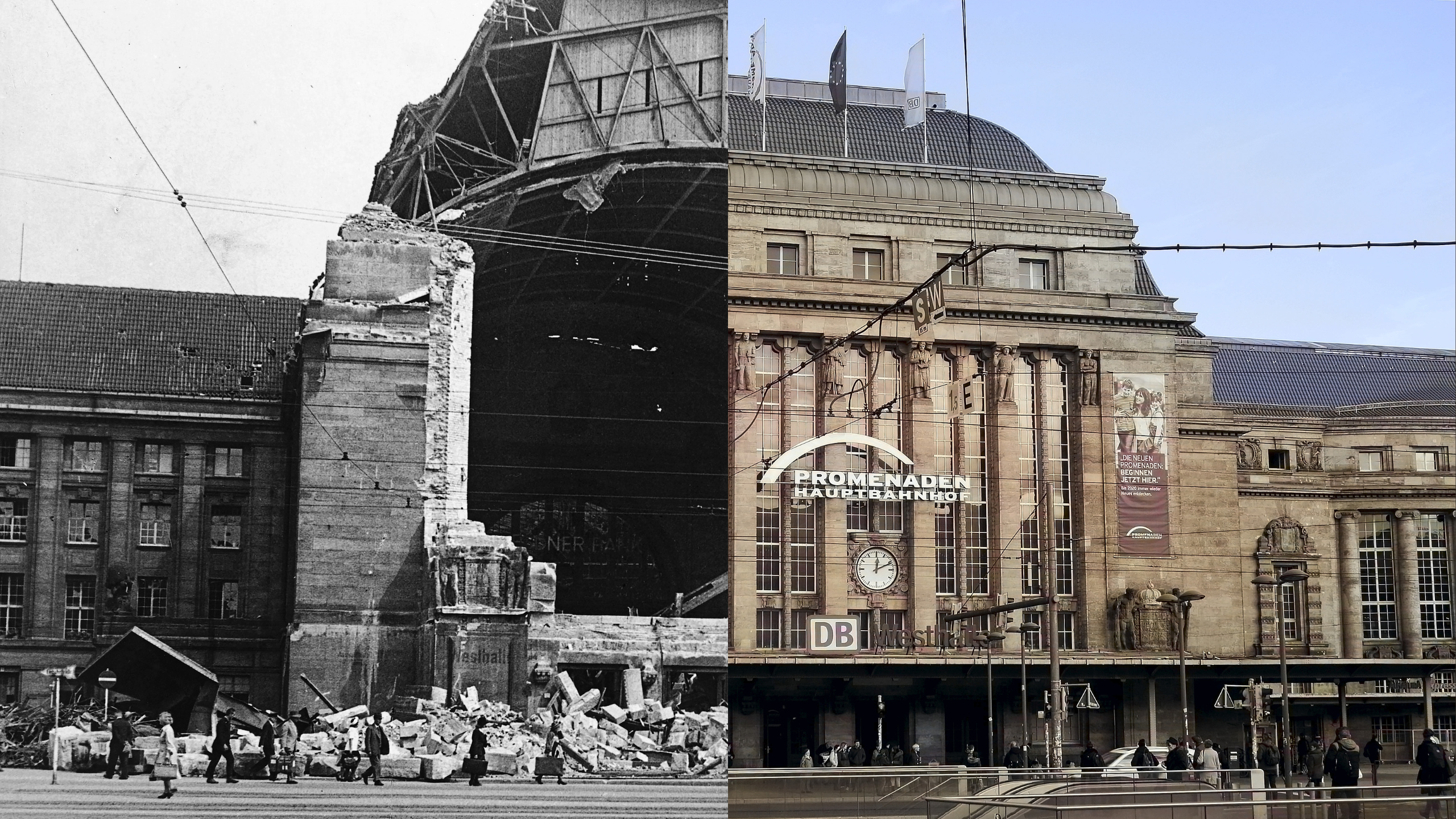

Leipzig’s Transformation Since 1945: War Damage and Reconstruction in Pictures
The destruction wrought by World War II marked—as in many other German cities—a profound turning point in Leipzig’s architectural development. Urban planning policies during the GDR era also contributed significantly to a lasting change in the historic cityscape. Due to the interplay of severe wartime destruction on the one hand and ideologically driven urban redevelopment […]
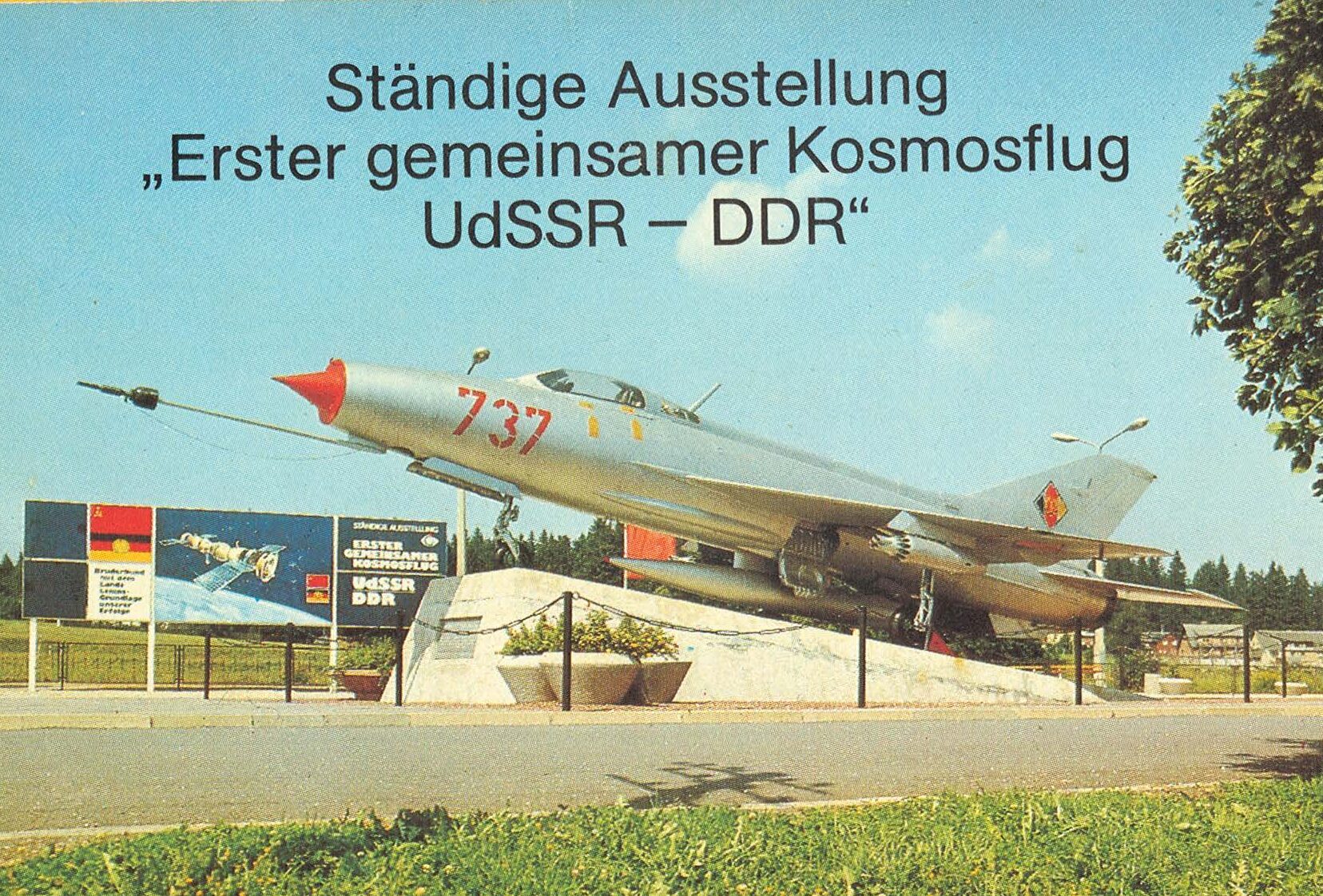
Morgenröthe-Rautenkranz: From a Propaganda Site to a Modern Space Museum
Click here for the German version. In the late 1970s, the small mountain village of Morgenröthe-Rautenkranz in the Vogtland region suddenly became a state-sponsored pilgrimage site. The reason for this was the so-called “space-first” achievement of the “Workers’ and Peasants’ State”: “The first German in space—a citizen of the GDR,” East German media proudly reported […]
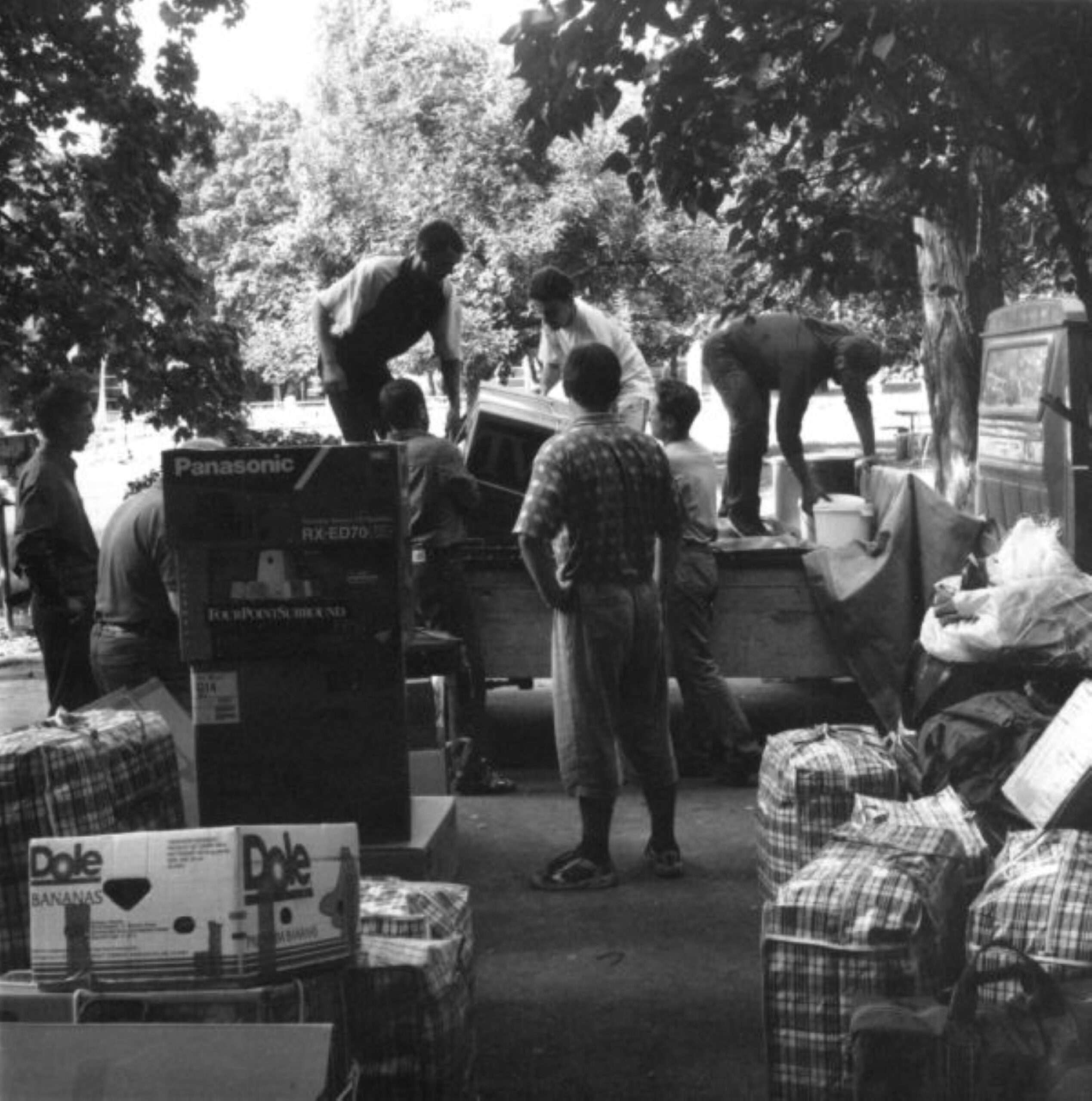
Photographs by the artist Rita Ostrovska: A Reflection of (Post-)Soviet Jewish Experience
Click here for the German version. “Basically, our journey to Germany began as early as December 1997. In the bitter cold, I stood in long lines outside the German Embassy in Kyiv to get an appointment and the necessary forms for a visa application,” Rita Ostrovska recalls more than two decades later. Born in Kyiv […]
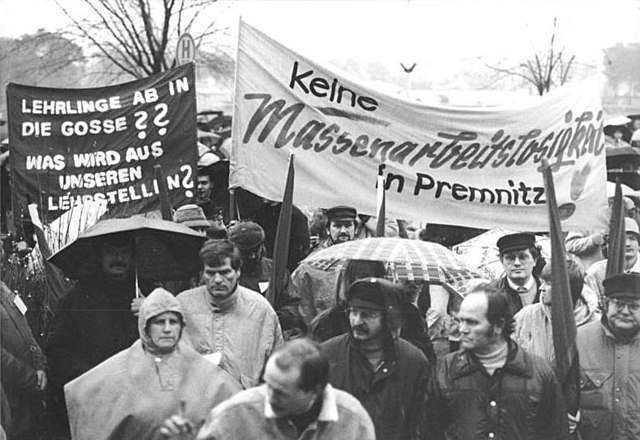
In the engine room of East Germany’s transformation
The Treuhandanstalt was an agency under the Federal Ministry of Finance responsible for the privatization of the East German economy, and its activities in reunified Germany remain highly controversial to this day. In East Germany in particular, the Treuhandanstalt has left a deep imprint on the collective memory. There is no doubt that the agency’s […]

Turning Points – November 9th in German History
November 9th is considered a day of upheaval in Germany. Four significant turning points of the 20th century fell on this day. On November 9, 1918, the German Empire ended with the proclamation of the Republic. Exactly five years later, on November 9, 1923, Adolf Hitler and Erich Ludendorff attempted a coup in Munich to […]