

Post
2 Min.
6. December 2025
Transformations through AI: The new era of human-machine communication
Artificial intelligence has now become an integral part of most people’s everyday lives. We use AI-powered toothbrushes, have our emails written automatically, and talk to our smartphones. It all seems so commonplace now that we may be forgetting to ask ourselves some very fundamental questions:
- How do we actually communicate with AI?
- How should and do we want to deal with these upheavals in our lives?
- What opportunities and risks might this emerging technology bring?
- What future scenarios can and must we prepare for?
- How does the proliferation of AI define a new relationship between fact and fiction?

Embracing the new era of human-machine communication: AI
To explore these questions together with researchers and the public, the Leibniz Institute for the German Language (IDS) and the Deutsches Museum have joined forces. Together with the renowned artist Janet Grau, they are developing an experimental presentation format that combines elements of performance, a staged reading, and an experimental lecture.
The project “Transformations through AI: The New Era of Human-Machine Communication” aims to foster a collaborative reflection on how we interact with AI.

Technologies can trigger social upheaval and transformation.
The collaborative project is funded by the first “Seed Money” call for proposals from the Leibniz Lab “Societal Upheavals and Transformations”. This lab of the Leibniz Association aims to investigate, from a wide range of perspectives, how societies and sciences deal with profound changes in order to jointly generate actionable knowledge for the future.

Contemporary art, history of science and linguistics: New paths of artistic research
The project is being designed and organized by Dr. Pamela Pachl from the Forum German Language department of the IDS (Institute for German Language), together with the Leibniz cooperation partners from the Research Institute for the History of Technology and Science at the Deutsches Museum, PD Dr. Rudolf Seising and Dr. Helen Piel.
Within the framework of their BMBF-funded research project IGGI on the “History of AI in the Federal Republic of Germany,” it was established that the IDS, as one of the first institutes in the Federal Republic of Germany, has been researching how language and computer use could transform each other since the late 1960s.
Art as Dialogue: Janet Grau at the Intersection of Creativity and Science
The Ohio-born (USA) artist Janet Grau was commissioned to develop this experimental transfer format. Her ability to directly involve people in her creative processes and her interest in collaboratively exploring the interplay of language(s), culture(s), and human relationships have led her to specialize in science communication. With her exceptional, often interdisciplinary work, she operates at the intersection of art, activism, and social engagement. Her artistic reputation has been recognized in recent years with numerous awards and prizes, including a grant from the SchUM cities (2024), project funding from the Ministry of Science, Research and the Arts Baden-Württemberg (2021), and funding from the Innovation Fund for the Arts Baden-Württemberg (2018).
Experience AI together!
Über diesen Artikel
Lesen Sie auch

Saudi Arabia in Transition: Between Reform and Control
Comedy and film festivals, rock concerts, and resorts on the Red Sea—these are not the kinds of things one would have associated with Saudi Arabia until recently. For eleven years now, a dramatic social transformation has been taking place in the vast Gulf state: Until then, the feared religious police enforced strict gender segregation in […]
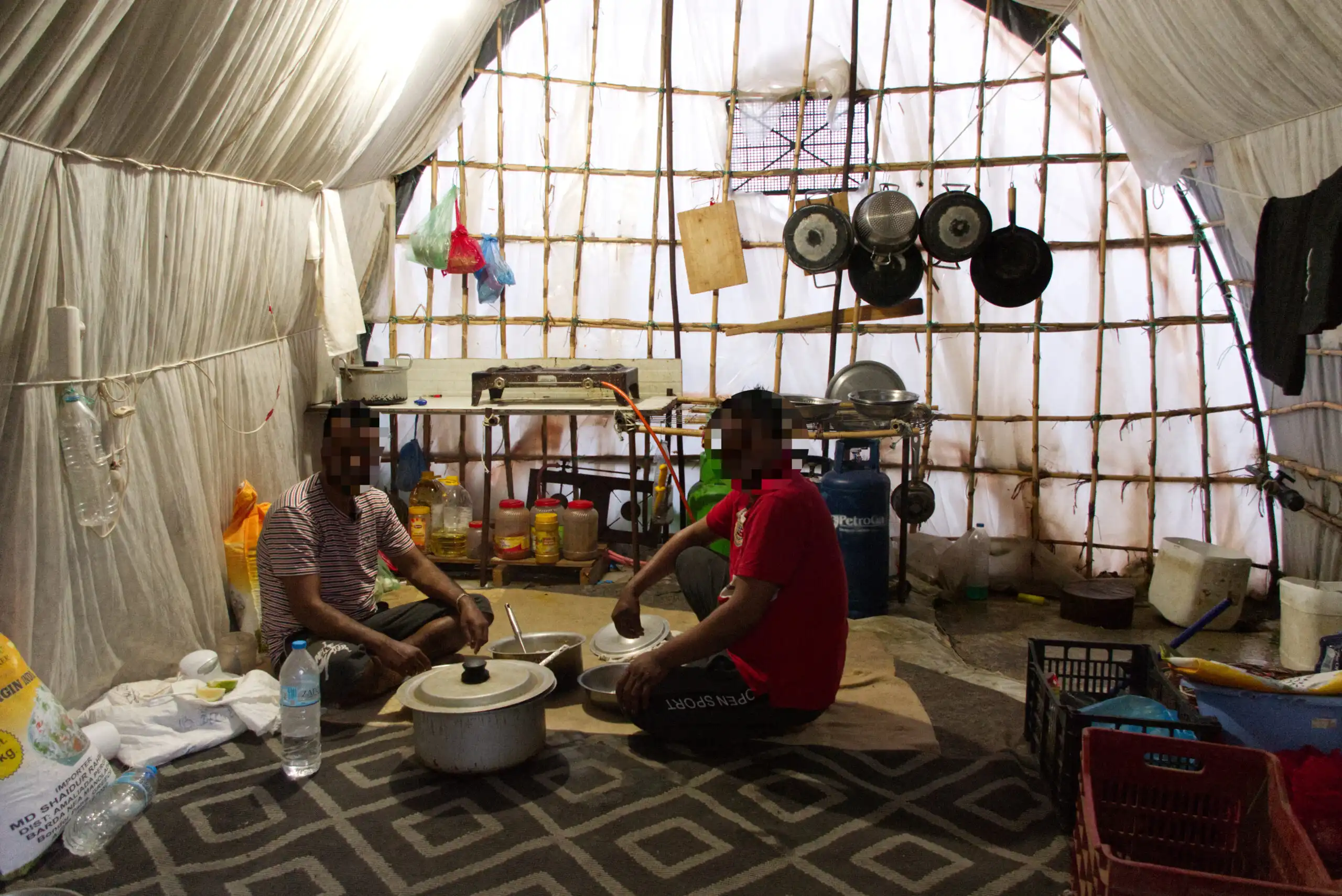
Greek strawberries “made in Bangladesh”
Strawberries are now also available to buy in winter. They thrive in Nea Manolada, Greece, but there are downsides to growing them. Scientist Johannes Jungfleisch has investigated the conditions of South Asian workers.
Unmet expectations
Click here for the German version. A Mid-Term Assessment of the First Twenty-Five Years of the 21st Century Years, decades, and centuries are constructs that historical change does not adhere to. Nevertheless, anniversaries invite us to take stock. After 25, 50, or 75 years, we look back, before the grand celebrations begin after 100 years. […]