


Post
6 Min.
3. February 2026
Unmet expectations
Prof. Dr. Frank Bösch
Direktor ZZF
Institut: Leibniz-Zentrum für Zeithistorische Forschung Potsdam (ZZF)
E-Mail: sekretariat@zzf-potsdam.de
Alle Artikel dieser Autor:inClick here for the German version.
A Mid-Term Assessment of the First Twenty-Five Years of the 21st Century
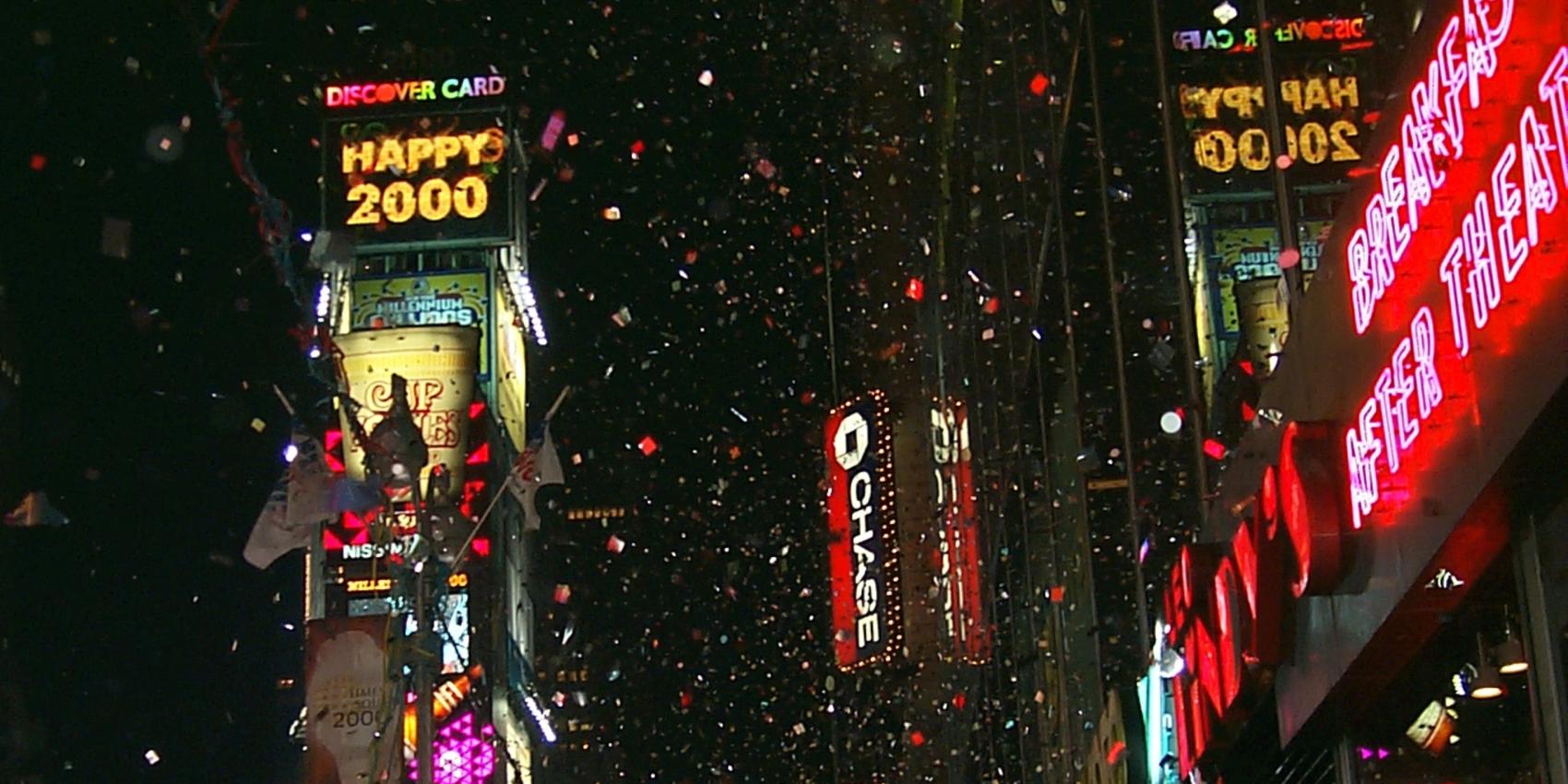
Years, decades, and centuries are constructs that historical change does not adhere to. Nevertheless, anniversaries invite us to take stock. After 25, 50, or 75 years, we look back, before the grand celebrations begin after 100 years. At the end of 2025, we will also be marking the first quarter of the 21st century. What is the interim conclusion?
Looking back, it is clear above all how uncertain and inaccurate expectations about the future are. In many respects, it has so far been a century of disappointments that followed the optimism after the end of the Cold War. At the beginning of the century, in September 2001, Vladimir Putin still received loud applause in the Bundestag, as many hoped for the democratization of Russia. In Germany, too, the radical right—which had entered the parliaments in the 1990s and committed widespread acts of violence—seemed to have been defeated. Today, right-wing nationalists are in power in many places, from Russia to Argentina.
The hope of curbing dictators and wars through multilateral sanctions and interventions has also failed time and again over the past 25 years. While it was still possible in the 1990s to curb the fighting and violence in the former Yugoslavia, for example, this seems illusory in today’s conflict zones. Mass murder in countries like Sudan is allowed to continue without intervention from the international community.
September 11, 2001, seemed to herald the great turning point of the new century. The fight against Islamist terrorism has remained a central theme ever since. The deadly attacks that shook London, Madrid, and eventually German cities served as justification for military operations. In Israel, the Second Intifada began, and the Oslo peace process collapsed. Yet neither high walls nor missiles aimed at Israel’s enemies curbed the violence. The long US-led campaigns in Iraq and Afghanistan did not lead to the flourishing of democracies. So far, it has become clear that religiously rooted cultural conflicts cannot be resolved militarily, but likely only through mutual compromises that accept diversity.
The evolution of migration has also been marked by misconceptions. Around the year 2000, migration no longer seemed to be a central issue. Restrictions on the right to asylum, the limited influx of ethnic German repatriates, and the strengthening of the EU’s external borders led to a decline in immigration. The 21st century, however, has shown that laws, fences, and development aid do not slow migration. Wars and persecution, climate change, and poverty continue to drive people from their homelands.
Privileged migration for certain groups—such as highly qualified high earners or Christian European war refugees—also appears to have failed. The Indian programmers courted around the year 2000 hardly came at all. Ukrainians were admitted on a privileged basis for good reasons, but their employment rates remained very low even after three years. Today, the labor market is lacking above all people who perform simple tasks.
Unmet expectations: digitalization
The limited predictive power of forecasts was also evident in the realm of digitalization. In 2000, hardly anyone foresaw the momentum that social media would gain. Similarly, even experts were surprised by how digital communication transformed everyday life via smartphones just a few years later. The rapid spread of AI programs once again demonstrates how unpredictable digital innovations are. The only certainty is that they will continue to influence every aspect of life. The digitization of everyday life is probably the most enduring hallmark of the 21st century so far.
Yet even digitization has been accompanied by unmet expectations over the past 25 years. Although we now submit our bills and tax returns digitally, German bureaucracy has not diminished. At government offices, we still wait for appointments to submit an application. Email, Zoom, and messaging apps have sped up our communication, but everyone complains that they barely have time for work or leisure amid all the messages and meetings. We book vacations online, yet the selection process takes forever, and dream homes are fully booked months in advance. In short: Contrary to all expectations, digitalization has done little to reduce stress and overload in the 21st century. On the contrary.
Digitalization held the promise of democratization. Social media and other platforms gave many people a voice. They often posted remarkably intelligent, witty, and influential content, even though they weren’t professional writers. But here, too, the assessment after 25 years is rather pessimistic. In the long run, Twitter, TikTok, and the like have tended to foster political radicalization and polarization. This applies not only to the shift to the right among young voters.
The Arab Spring, beginning in 2010, also underscored that while social media could spark mass protests, the autocrats’ weapons prevailed. Hopes for reform in Iran were dashed time and again. In 2020, the last democracy of the brief Arab Spring in Tunisia also collapsed. Assad’s regime was defeated in Syria, as was the “Islamic State.” But in both cases, it was the armed struggle, not social media, that ended the oppression. Nor did social media slow the advance and wars of autocracies like Russia. It will not be digital media alone, but digitally equipped armies that will decide matters of power for the remainder of the 21st century.
Climate Change and Everyday Behavior
The environmental record is no less sobering. By 2000, everyone had long been aware of rising global temperatures. In Germany, the red-green coalition government began expanding renewable energy and phasing out nuclear power. Combating climate change seemed technically feasible and even compatible with economic prosperity. But even this brief period of optimism quickly lost momentum. The plummeting prices of oil and gas favored pipelines from autocratic regimes, not more solar panels in sunny regions. The aviation and travel industries continued to boom. And rising housing prices fueled a construction boom. Although it is well known that the construction and operation of homes account for 40 percent of CO2 emissions, demand grew for large new buildings that seal off the suburbs. These dreams built of cement show just how difficult it is to make changes in everyday life.
The COVID-19 pandemic was one of the major upheavals of the 21st century. By 2020, it was quickly seen as the watershed moment that changed everything: the end of hedonistic city life, of major events, of carefree travel—indeed, the collapse of globalization. “Deglobalization” became the new buzzword, linked to the protectionism of autocrats. In the end, the pandemic was further proof of how inaccurate the forecasts for the 21st century turned out to be. From the hard rockers in Wacken to the carnival-goers in Rio, crowds are now embracing each other at events. Major cities remain more popular than ever. And despite Zoom, significantly more people are flying today than in 2019. The arms race will also trigger enormous ecological costs. The attacks on nuclear power plants in Ukraine underscore that nuclear power plants are not a safe option for the future. Around the year 2000, many assumed they would be phased out worldwide. Today, they are booming in many countries.
Many of the dramatic crises of the 21st century have quickly faded into the background. After 2007, for instance, the financial crisis was seen as the collapse that would transform capitalism. The economic crisis that shook Europe from Greece to Ireland seemed poised to bring down the EU, the euro, and neoliberalism itself. Once again, things turned out differently—this time in a positive sense: The European Union and the euro are more stable than they were in the early 2010s. And the former problem children, from Ireland to Portugal, have become sought-after havens for investors thanks to low taxes. Above all, this has reinforced one thing: growing social inequality, another defining feature of the 21st century.
Beyond pessimism
The dashed hopes of the past 25 years suggest that we should look ahead to the rest of the 21st century with pessimism. Global warming, wars, and right-wing populism seem to be shaping the future. In the past, generational change offered hope. Now, however, young people—especially young men in the east—are also voting primarily for the AfD. It used to be thought that the Nazis would die out along with the older generation. Currently, the older baby boomers—who will in the future strain pension funds and healthcare costs—are the most loyal supporters of the democratic parties. Since the 1970s, this generation has been actively involved in a wide range of volunteer and political activities. Now it is seen as a burden for the next 25 years, blamed for many problems.
Of course, there are many things that have improved in the 21st century. This is especially true for gender equality. Despite the continued unequal distribution of care work, women today participate in politics, the workforce, and society on a much more equal footing and as a matter of course than they did in 2000. Health policy has shown remarkable resilience: deadly diseases, from AIDS to Ebola to COVID, have ultimately been contained with surprising speed.
Given the rhetoric from the right emphasizing Germany’s decline, it’s worth taking a look at the statistics. In the late 1990s, for instance, German cities and streets were significantly more dangerous. The number of homicides dropped sharply, as did the number of traffic fatalities. Some cultural sections lament the decline of education, arguing that Goethe, Kant, and Adorno are hardly read anymore. In fact, the 21st century has brought an expansion of educational opportunities, enabling more young people to earn a high school diploma and pursue higher education than in the seemingly glorious 20th century. The secondary schools that dominated at the time taught Schiller’s poetry, but hardly any foreign languages or natural sciences. The German literary canon has undoubtedly lost much of its significance. High school graduates no longer flock to German studies and sociology, but today primarily study business administration, computer science, law, medicine, or engineering. This need not be a bad thing for meeting future challenges.
The first twenty-five years of the 21st century do not inspire optimism. But there may also be some comfort in the fact that the predictions made around the year 2000 failed to materialize. The 21st century has shown that things can turn out differently than planned. Putin’s sudden death or Trump’s defeat in the election could usher in new directions. However, overcoming the major challenges of the future depends not only on individual great men, but on the behavior of all of us. How we consume, live, and treat marginalized groups will shape the next quarter-century of the 21st century. It is up to all of us to ensure that the retrospective in 2050 turns out differently.
This text was published first on zeitgeschichte|online December 29th 2025.
Über diesen Artikel
Lesen Sie auch

Saudi Arabia in Transition: Between Reform and Control
Comedy and film festivals, rock concerts, and resorts on the Red Sea—these are not the kinds of things one would have associated with Saudi Arabia until recently. For eleven years now, a dramatic social transformation has been taking place in the vast Gulf state: Until then, the feared religious police enforced strict gender segregation in […]
Greek strawberries “made in Bangladesh”
Strawberries are now also available to buy in winter. They thrive in Nea Manolada, Greece, but there are downsides to growing them. Scientist Johannes Jungfleisch has investigated the conditions of South Asian workers.
On the Run – The Story of Mouhamed
The German version is here. On a typical weekday, life in the city is bustling. Many different people are busy going about their daily routines. Some would like to find work, but they can’t—they are forced to wait. Mouhamed is one of them. He was born in Cameroon in 1994 and studied political science. After […]