


Post
4 Min.
1. April 2026
Saudi Arabia in Transition: Between Reform and Control

Prof. Dr. Ulrike Freitag
Direktorin
Institut: Leibniz-Zentrum Moderner Orient (ZMO)
E-Mail: zmo@zmo.de
Alle Artikel dieser Autor:inComedy and film festivals, rock concerts, and resorts on the Red Sea—these are not the kinds of things one would have associated with Saudi Arabia until recently. For eleven years now, a dramatic social transformation has been taking place in the vast Gulf state: Until then, the feared religious police enforced strict gender segregation in public, women required the consent of their male guardians for nearly all official matters, and entertainment took place in private settings or abroad.
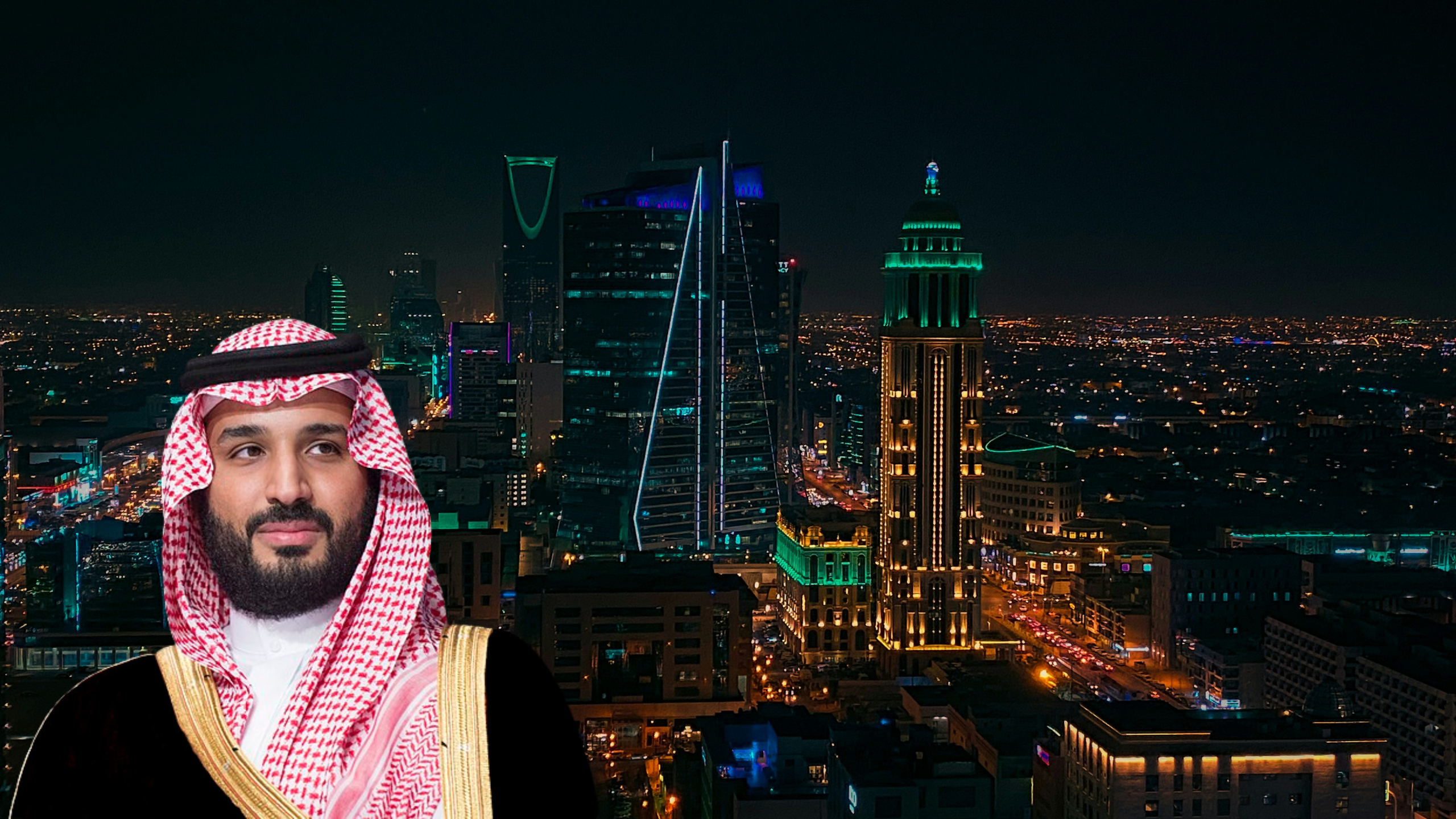
The dramatic upheavals mentioned above are part of the program through which Saudi Crown Prince Muhammad bin Salman—also known as MbS—has been systematically transforming the Kingdom of Saudi Arabia for over a decade. When the ailing 90-year-old King Abdullah died in January 2015, he handed over the reins of power to his brother Salman, who was only eleven years his junior and also a son of the state’s founder, Abd al-Aziz ibn Saud. Between 1902 and 1934, the latter had conquered all parts of what is now the state of Saudi Arabia and proclaimed the founding of the kingdom in 1932.
Salman bin Abd al-Aziz carried out the long-overdue generational transition by appointing his thirty-year-old son as Minister of Defense and entrusting him with responsibility for the royal court. Shortly thereafter, he named him deputy crown prince, and two years later, acting crown prince.
Saudi Arabia aims to take the lead with Vision 2030
As the official in charge of the economy, MbS unveiled the so-called Saudi Vision 2030 in April 2016, an ambitious program aimed at transforming the country. At the heart of the program is the gradual reorientation of the Saudi economy, which is dependent on fossil fuel exports. In addition to developing new industries—particularly in the petrochemical and digital sectors as well as in renewable energy—the entertainment industry, sports, the arts, and the tourism sector were to play a special role.
This, of course, required a significant realignment in the religious and social spheres: in this religiously conservative country, religious scholars had dominated not only public life but also the education sector, particularly since the 1980s. This entailed, in addition to strict gender segregation, strict rules regarding clothing and behavior in public. Many forms of entertainment, from chess tournaments to concerts and film screenings, were considered un-Islamic. Women, in particular, were subject to a wide range of restrictions. Although King Salman’s predecessor had already implemented certain relaxations—such as opening up a few new sectors where women were permitted to work—this had occurred only very gradually.
Within a few months, MbS lifted a wide range of bans and abolished many of the rules that had previously restricted women. In most areas, women can now act independently: they have access to personal documents and hospital care without consulting a guardian, are allowed to drive and rent apartments on their own, travel, and, above all, work in almost all fields.
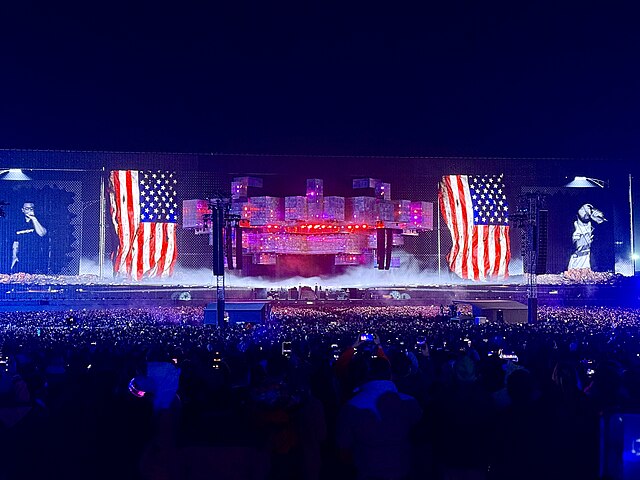
These initiatives are very well received by a predominantly young population, especially since many young Saudis are familiar with the United States. Many have studied there on government scholarships and have grown accustomed to the Western lifestyle. Alongside Arab and international tourists, they are also the primary target audience for the aforementioned developments in entertainment, sports, and culture. These include, in addition to the construction of the Qiddiyya entertainment complex outside Riyadh, spectacular festivals such as “Soundstorm,” the Islamic Biennale in Jeddah, and international sporting events such as the Women’s Tennis Association Finals and, as the ultimate prize, the 2034 FIFA World Cup.
Less visible are the diverse educational and training programs across all fields, from sports to the arts, which offer young Saudis the opportunity to acquire foundational knowledge in these areas and either break into new professions or at least develop new leisure activities. In contrast to the often extremely expensive sports and entertainment offerings, these programs are aimed at the general population and are frequently very well received.
Saudi-Arabia as the new rival in the Middle East
In many respects, Vision 2030 follows a blueprint that has already been implemented in the United Arab Emirates and Qatar. In doing so, Saudi Arabia is deliberately positioning itself in competition with the smaller Gulf states. Although they are united in the Gulf Cooperation Council, Saudi Arabia has, for example, decreed that foreign companies will only be allowed to participate in lucrative government contracts if they relocate their regional headquarters from socially liberal Dubai to Riyadh. And in terms of foreign policy as well, rivalry with both Qatar and the Emirates has intensified in recent years.
Modernization yes, democratization no
In the West, it is often overlooked that this social opening is the product of authoritarian modernization. Saudi Arabia has never been a liberal kingdom, though there was certainly considerable leeway for critical debate, provided it did not undermine the very foundations of the regime—in particular, Islam and the monarchy. This may be related to the fact that, since the death of the state’s founder in 1953, a certain fragmentation of state power had set in: central ministries and provinces were administered by prominent princes, who often viewed their offices as a basis for developing their own power bases and in some cases passed them on to their sons. This practice was among the first things Muhammad bin Salman targeted: In November 2017, nearly four hundred prominent princes and businessmen were detained at the Ritz-Carlton in Riyadh. Under the guise of fighting corruption, they were only released after transferring significant portions of their assets to the state and agreeing to comply with substantial conditions.
The crackdown on corruption among the previously largely untouchable elite was well received by the public. Yet at the same time, the central strategic goal of the campaign was impossible to overlook: the monopolization of power in the hands of the crown prince.
Under this pretext, critics of the regime were also persecuted. The most spectacular case was likely the murder of Jamal Khashoggi, a journalist living in the U.S., in October 2018 at the Saudi Consulate General in Istanbul. Many journalists, writers, scholars, as well as students and others—some of whom had merely expressed critical views on social media—were affected and were often sentenced to very lengthy prison terms or even the death penalty.
Even those women who had taken great risks in the past to fight for more rights for women—and in particular the right to drive—felt the heavy hand of the new regime: Before the driving ban was lifted, some had been imprisoned; others had been warned by the regime not to refer to their earlier demands. The message was clear: The regime makes concessions, but it does not yield to demands from the population.
Über diesen Artikel
Lesen Sie auch


Traveling at 40,000 km/h towards Earth: Space debris is harming our environment
High above our heads, the International Space Station (ISS) orbits at an altitude of around 400 kilometers. Astronauts live and work there under extreme conditions. But they face a new and growing problem: space debris. This debris consists of old satellite parts, spent rocket stages, and broken equipment. Even pieces just millimeters in size hurtle […]
Greek strawberries “made in Bangladesh”
Strawberries are now also available to buy in winter. They thrive in Nea Manolada, Greece, but there are downsides to growing them. Scientist Johannes Jungfleisch has investigated the conditions of South Asian workers.
Unmet expectations
Click here for the German version. A Mid-Term Assessment of the First Twenty-Five Years of the 21st Century Years, decades, and centuries are constructs that historical change does not adhere to. Nevertheless, anniversaries invite us to take stock. After 25, 50, or 75 years, we look back, before the grand celebrations begin after 100 years. […]