


Post
5 Min.
28. December 2025
On the Run – The Story of Mouhamed
Dr. Karin Wiest
Projektleiterin Stadt in Bewegung
Institut: Leibniz-Institut für Länderkunde (IfL)
E-Mail: K_Wiest@leibniz-ifl.de
Alle Artikel dieser Autor:inThe German version is here.
“We live like prisoners in the open air. Do you understand that? If you don’t have a residence permit, it means your freedom of movement is restricted and you can’t fulfill your potential.”
– Mouhamed
On a typical weekday, life in the city is bustling. Many different people are busy going about their daily routines. Some would like to find work, but they can’t—they are forced to wait. Mouhamed is one of them. He was born in Cameroon in 1994 and studied political science. After a very long journey as a refugee, he hopes to settle in Leipzig in August 2020. His goal is to become a “contributing” citizen. He wants to complete his education and show that he can make a valuable contribution to the city’s community. But there are many obstacles in his way. Join him on his difficult and uncertain journey to and through Leipzig.
Arrival in Leipzig
Mouhamed arrives in Leipzig amid the COVID-19 crisis. As a result, he must first spend two weeks in quarantine before spending six months in an initial reception center for refugees and finally nearly two years in shared housing. When Mouhamed is admitted to the Max-Liebermannstraße initial reception center, he is still full of optimism. This first period in the new city seems very lively to him, and he is able to make new connections. You will see that this hope gradually fades away later on.
“The first few weeks were very lively, and I settled in very well at the camp. I made friends with people from other countries and started teaching myself German.”
– Mouhamed
Initial reception centers are generally the first recognized, official points of arrival for asylum seekers in Germany. These facilities serve as a kind of transition zone: they are designed to provide people in a highly vulnerable situation with guidance in daily life and a sense of direction. Often, the diverse behaviors and habits of the new arrivals must be reconciled. Noise, a lack of privacy, and the need to respect vastly different cultural backgrounds pose significant challenges in this environment.
Leipzig’s housing concept for decentralized accommodation for refugees aims to enable asylum seekers to move into their own apartment outside of shared housing as soon as possible after their arrival: into residential buildings, transitional apartments, and shelters for refugees distributed throughout the city.
Since his arrival in Leipzig, Mouhamed has been doing a lot to integrate into the city’s community. He takes language courses and volunteers. People who are active in the city’s clubs and sociocultural institutions and who advocate for the interests of migrants and refugees help him with administrative procedures and in finding an internship and his own apartment. On the map, you can learn about the various clubs and organizations that strive to support people who are new to Leipzig.
Not belonging
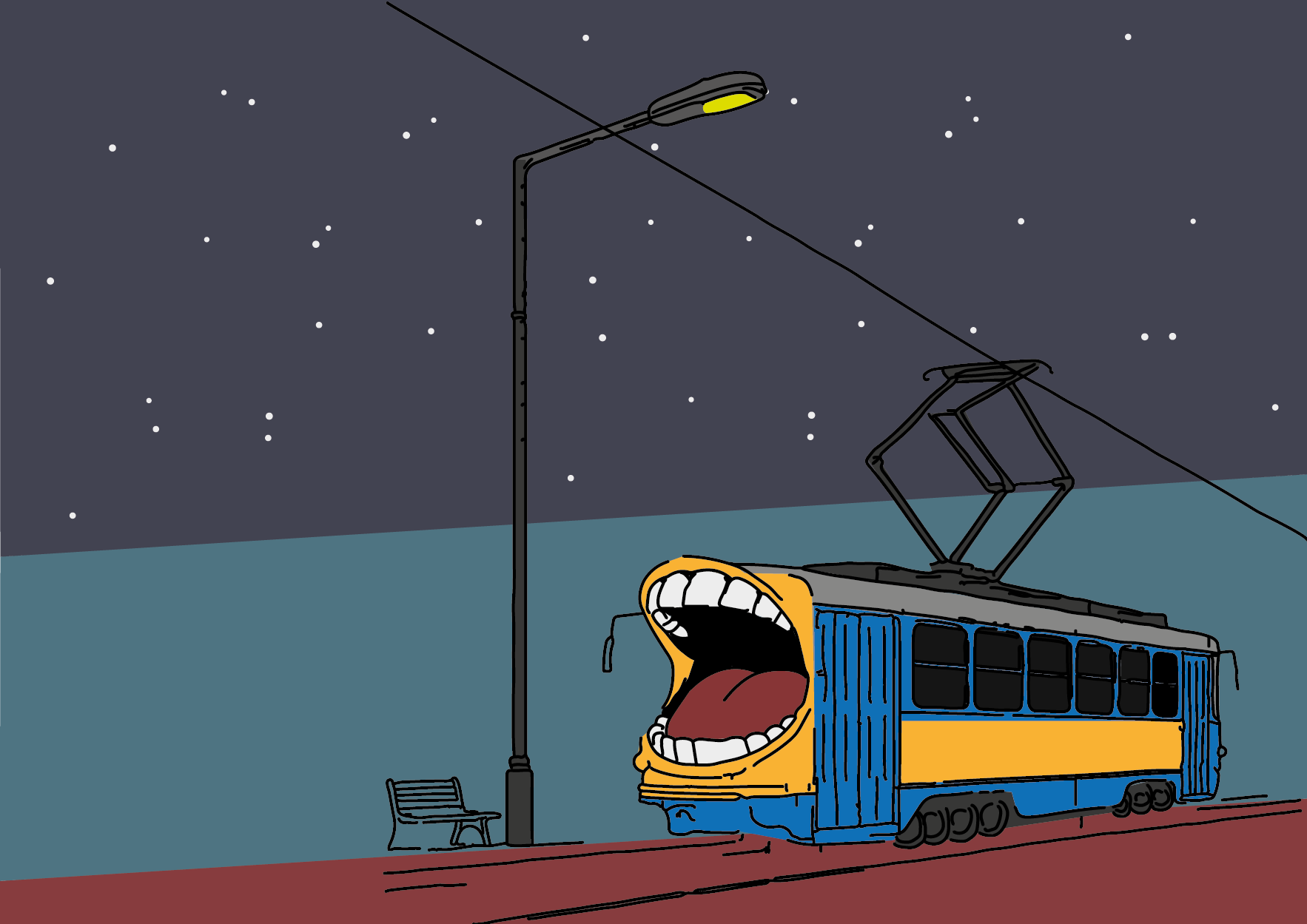
Mouhamed often takes the tram when he goes around town, to government offices, or to see doctors. In these settings, he frequently feels and sees that he is treated differently from other people. For instance, he is stopped for ID checks with striking frequency, or passengers avoid sitting right next to him—which makes him feel very excluded. Like a stranger! Exclusionary glances and condescending ways of speaking and interacting with others based on their background are also referred to as everyday racism. Through such experiences, Mouhamed observes how people interact in the city very closely. He knows that the nature of these encounters in public spaces is of great importance for the functioning of urban society.
“Public spaces are not homogeneous by nature. And given this diversity in public spaces, it is very important to exercise tolerance, acceptance, patience, and sometimes sensitivity in the remarks we make in public.”
– Mouhamed
Everyday encounters with city residents don’t just happen on the tram, but also at school, at work, in language classes, or even at the supermarket. They can be positive and helpful, but they can also be exclusionary and hostile. Feeling comfortable, safe, and included as you move through the city depends heavily on this: How do people look at me? How do they speak to me? How do we look out for one another? Small gestures, such as helping with a stroller or offering up a seat, can have a more positive impact than one might think. Leipzig’s public green spaces are also places where the city’s community comes together.
An oasis of calm
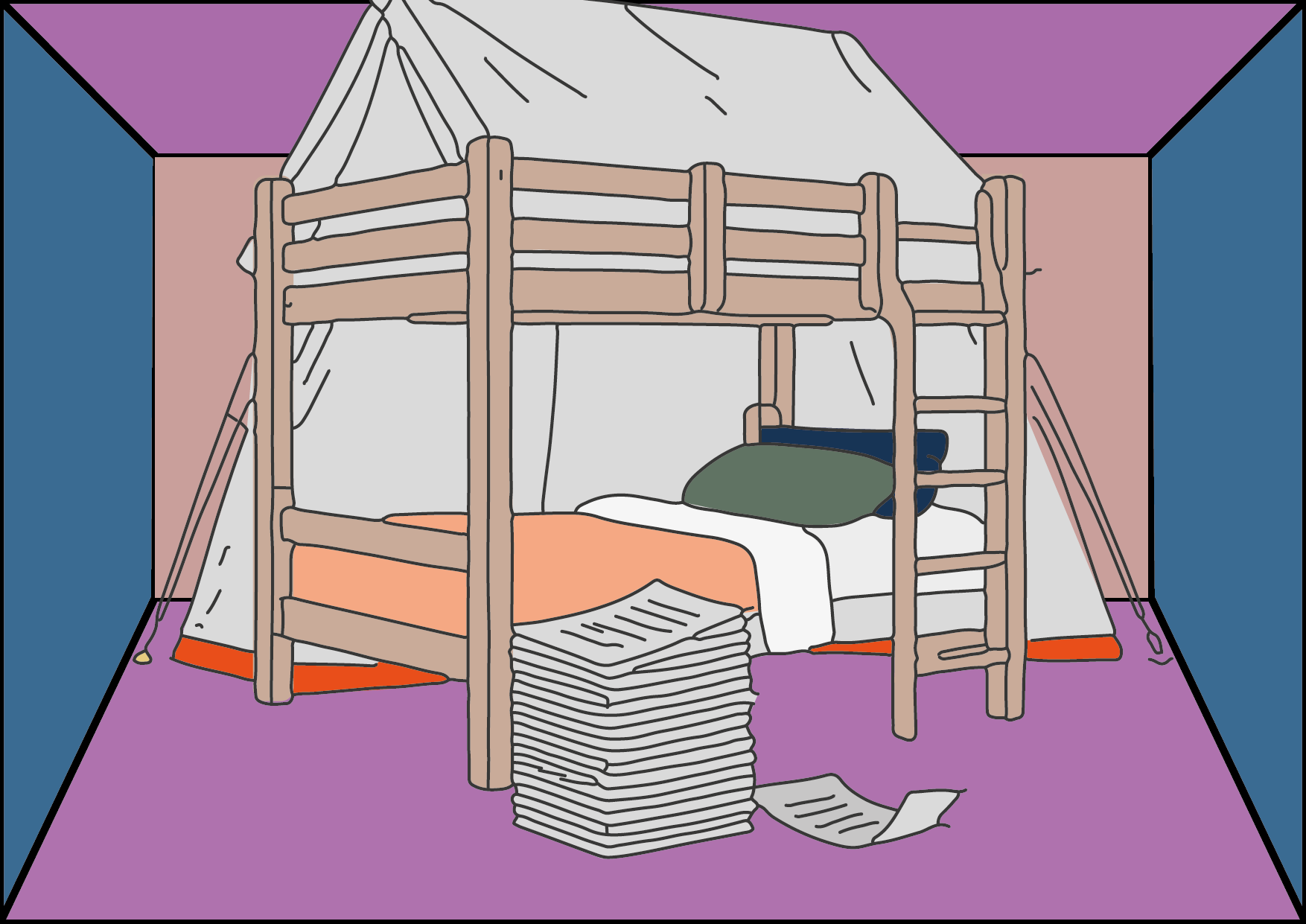
Mouhamed sits pensively on a bench in Schönauer Park, staring at his hands. He enjoys spending time in the park. Here he can relax, reflect, and read. For him, reading means education, and education is key to a more just world and fair coexistence. When he reads, he can forget his troubles. While reading and thinking in the park, he asks himself many questions about his life, his uncertain future, and how things will turn out. He often retreats here when his head is spinning. Then he goes to look at nature—or he goes for a jog to cope with the stress, uncertainty, and bouts of depression.
When Mouhamed can take a break in the park, he’s happy to sometimes watch children playing there. Then he thinks of his own childhood in Cameroon and remembers that he didn’t have the same opportunities to start out:
“The children here seem happy. I wasn’t so lucky; I didn’t have the chance to do all those things when I was their age. I was always oppressed, always on the run, always tortured. My parents belonged to two different religions, and there was this religious war that destroyed my childhood and my youth.”
– Mouhamed
But for him, the city’s parks weren’t just about peace and relaxation. He often spent the night in the parks because his immigration status in Germany was still unclear and he was afraid of being deported. At that time, fear was his constant companion.
“Yes, I was scared every day. I slept in parks in Germany. I slept here in the park because I was afraid of being deported… You don’t know when they’ll come to pick you up. You just don’t know. You don’t feel safe.”
– Mouhamed
Near Schönauer Park, Mouhamed has finally found a new place to live after more than two years. It’s only about a ten-minute walk from here to his small apartment in the Grünau neighborhood.
A new home?
Today Mouhamed is standing lost in his thoughts on the window of his small apartment in Grünau-Mitte. He has been living here since 2023. He waits here daily to receive notice about his residency status in Germany. He is only very rarely among people as he spends ten to twelve hours a day on the computer: He is doing an online training and a language course. Due to the isolation caused by his long work on the screen, he sometimes falls into a deep hole. What burdens him most, however, is not being able to plan as his future is unclear to this day. Accordingly, his weeks consist of waiting and insecurity. Mouhamed goes to the mailbox multiple times a day in the hope that he will learn something new about his residency status from the authorities.
As there is no perspective to stay in Germany in the long term, he is questioning more and more the efforts and exertions of the last years.
“Sometimes it is extremely difficult. It is so difficult that you even believe that there is never going to be a solution. But I am here. But I don’t know what will happen tomorrow. Maybe there is going to be a new law of the German minister of the interior that makes me scared… In my head I am so tired… I am already dead, deep down I am not really living.”
– Mouhamed
His new home, the large housing estate of Grünau, a “Platte” (a type of prefabricated apartment block) as many call it, has changed dramatically since its construction in the 1980s. Since 2015, people from various inner-city neighborhoods have moved to Grünau. The fact that refugees are initially housed in large communal accommodations and later in smaller, decentralized accommodations or rental apartments can only be surmised from these migration patterns. Particularly in 2018, closer migration connections were evident between Grünau and the district of Möckern – the location of the initial reception center for refugees. Mouhamed was also housed there upon his arrival. In Grünau, the city of Leipzig provides housing that is allocated to the decentralized accommodation of refugees.
Since 2015, the year of the large influx of refugees to Germany, the way refugees are treated in politics and society has changed dramatically. Exclusionary and even hostile attitudes towards refugees have become more prevalent in society. They are not a new phenomenon, but they have increased significantly – unfortunately, also among young people. Applying for asylum and receiving protection is a fundamental human right. Mouhamed, too, has faced prejudice, rejection, and exclusion repeatedly throughout his long journey and since arriving in Leipzig. Many people are unaware that behind every refugee story is a human being with hopes, experiences, and a desire for safety and dignity.
“You know, this person is capable of contributing to society. Even if they don’t yet have a residence permit, they’re not making life difficult for themselves. That’s my way of thinking. That’s how I see things.”
– Mouhamed
Mouhamed’s story was documented as part of the project “city in movement”. The project is being conducted by the Leibniz-Institut für Länderkunde (IfL) and the Leibniz-Institut für Bildungsmedien | Georg-Eckert-Institut (GEI) and is being financed by the Leibniz-Lab. More background information about Mouhamed’s story as well as additional biographies from the project can be found here.
Über diesen Artikel
Lesen Sie auch

Greek strawberries “made in Bangladesh”
Strawberries are now also available to buy in winter. They thrive in Nea Manolada, Greece, but there are downsides to growing them. Scientist Johannes Jungfleisch has investigated the conditions of South Asian workers.
How communities can improve the integration of migrants
Millions of people seek asylum in Europe every year. However, complex rules make it difficult for migrants to arrive and integrate successfully. Local authorities have opportunities to facilitate the integration process. We present a few examples.
Saudi Arabia in Transition: Between Reform and Control
Comedy and film festivals, rock concerts, and resorts on the Red Sea—these are not the kinds of things one would have associated with Saudi Arabia until recently. For eleven years now, a dramatic social transformation has been taking place in the vast Gulf state: Until then, the feared religious police enforced strict gender segregation in […]