


Post
< 1 Min.
22. April 2026
Leipzig’s Transformation Since 1945: War Damage and Reconstruction in Pictures

Dr. Karin Wiest
Projektleiterin Stadt in Bewegung
Institut: Leibniz-Institut für Länderkunde (IfL)
E-Mail: K_Wiest@leibniz-ifl.de
Alle Artikel dieser Autor:inMartin Toste
Bibliothekar
Institut: Leibniz-Institut für Länderkunde (IfL)
E-Mail: M_Toste@leibniz-ifl.de
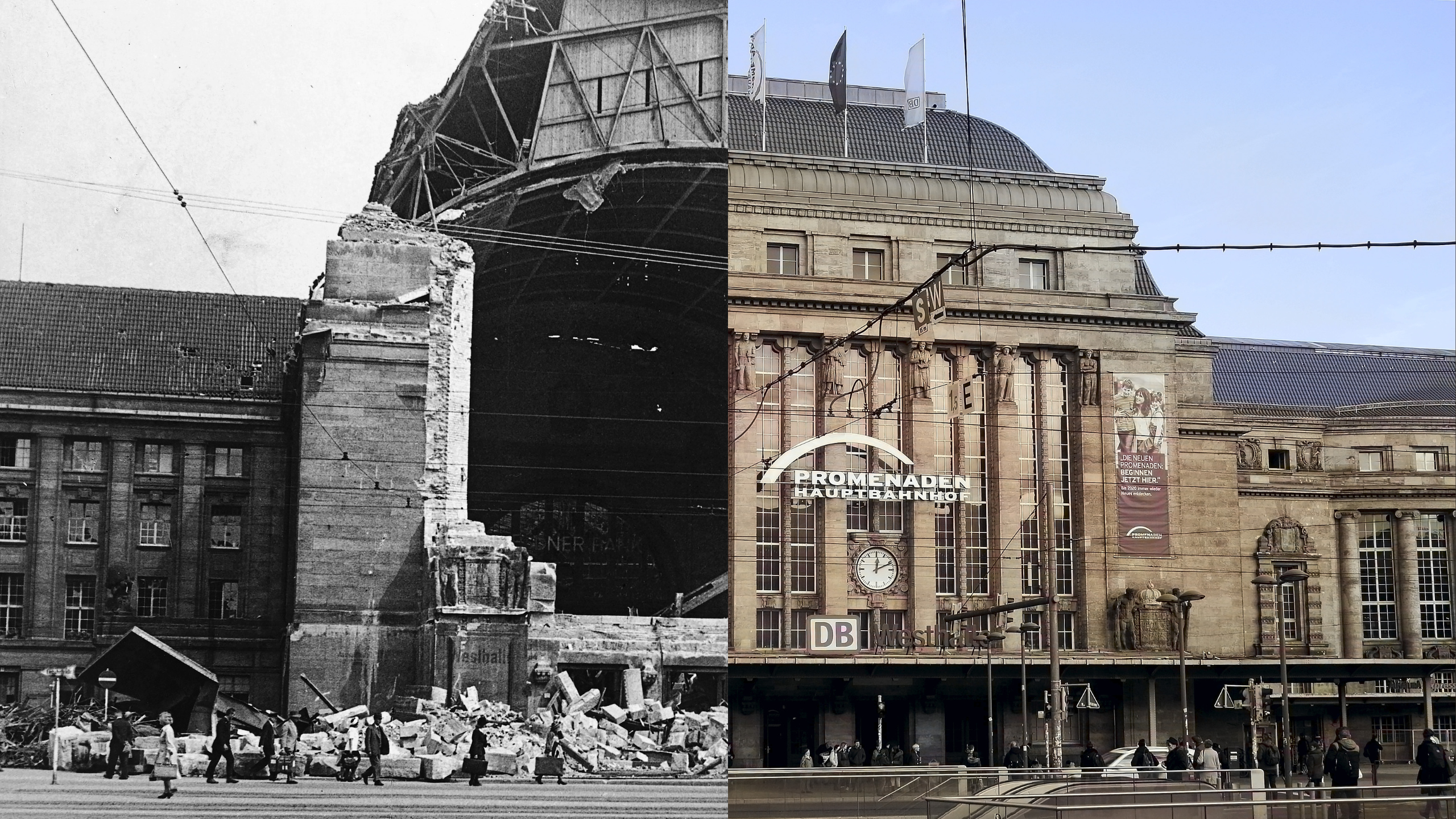
Alle Artikel dieser Autor:inThe destruction wrought by World War II marked—as in many other German cities—a profound turning point in Leipzig’s architectural development. Urban planning policies during the GDR era also contributed significantly to a lasting change in the historic cityscape. Due to the interplay of severe wartime destruction on the one hand and ideologically driven urban redevelopment by the GDR on the other, Leipzig’s city center in particular underwent a comprehensive urban transformation, which this web documentation explores photographically, particularly through image comparisons.
The image archive of the Leibniz Institute for Regional Geography (IfL) contains several photo series documenting the state of the city immediately after the end of the war as well as in 1954. In addition, the collection includes numerous images that vividly illustrate both the reconstruction and the progressive decay and further destruction during the GDR era. These include photographs and aerial views from the 1950s through the 1970s.
This digital documentation is based on these archival holdings and is supplemented by contemporary photographs by Martin Toste. The documentation expands upon the publication “Leipzig: Risen from the Ruins,” with web-based elements that allow viewers to explore interactive image comparisons in detail.
You can find the full article, including all images and maps here.
Über diesen Artikel
Lesen Sie auch

Morgenröthe-Rautenkranz: From a Propaganda Site to a Modern Space Museum
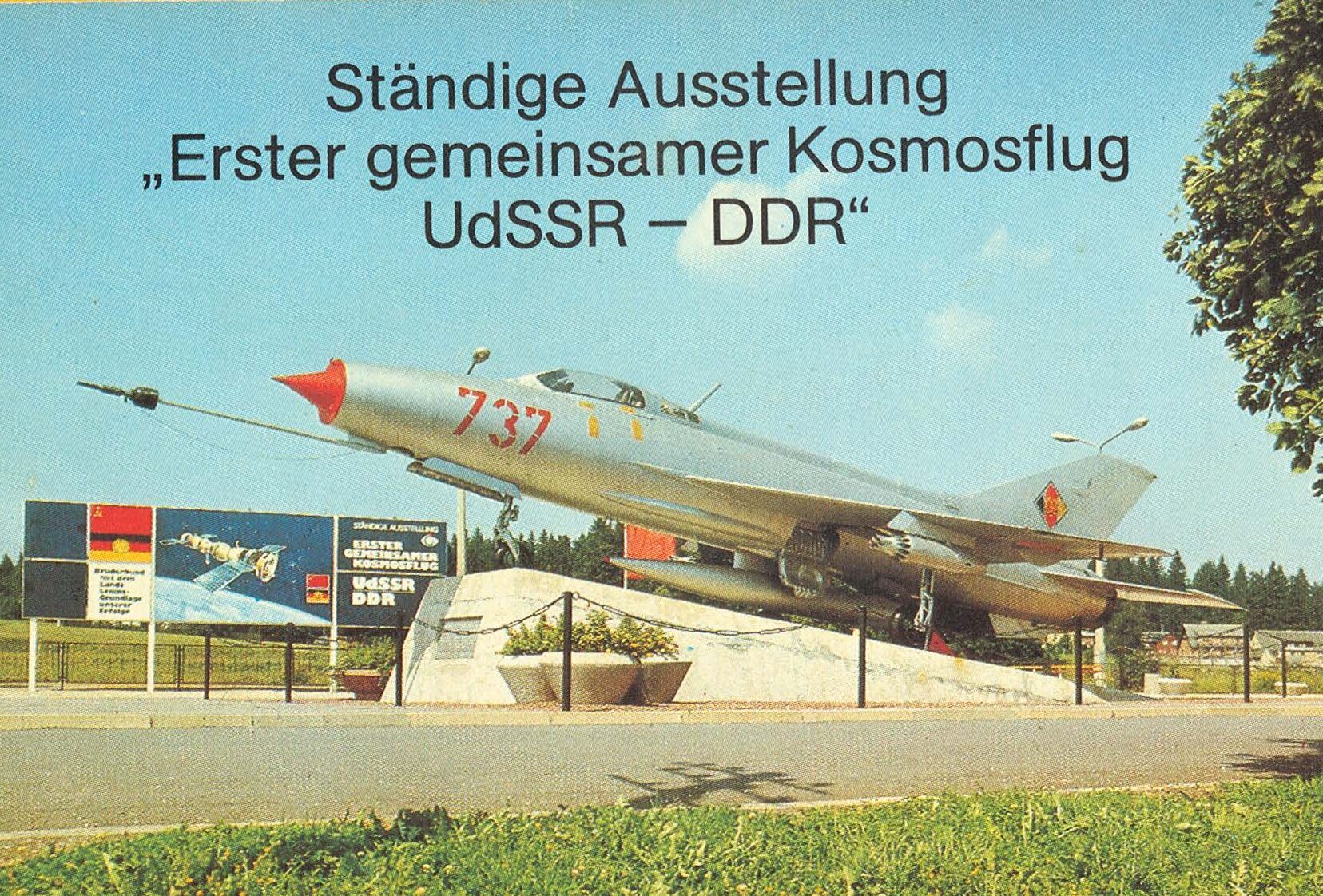
Click here for the German version. In the late 1970s, the small mountain village of Morgenröthe-Rautenkranz in the Vogtland region suddenly became a state-sponsored pilgrimage site. The reason for this was the so-called “space-first” achievement of the “Workers’ and Peasants’ State”: “The first German in space—a citizen of the GDR,” East German media proudly reported […]
Photographs by the artist Rita Ostrovska: A Reflection of (Post-)Soviet Jewish Experience
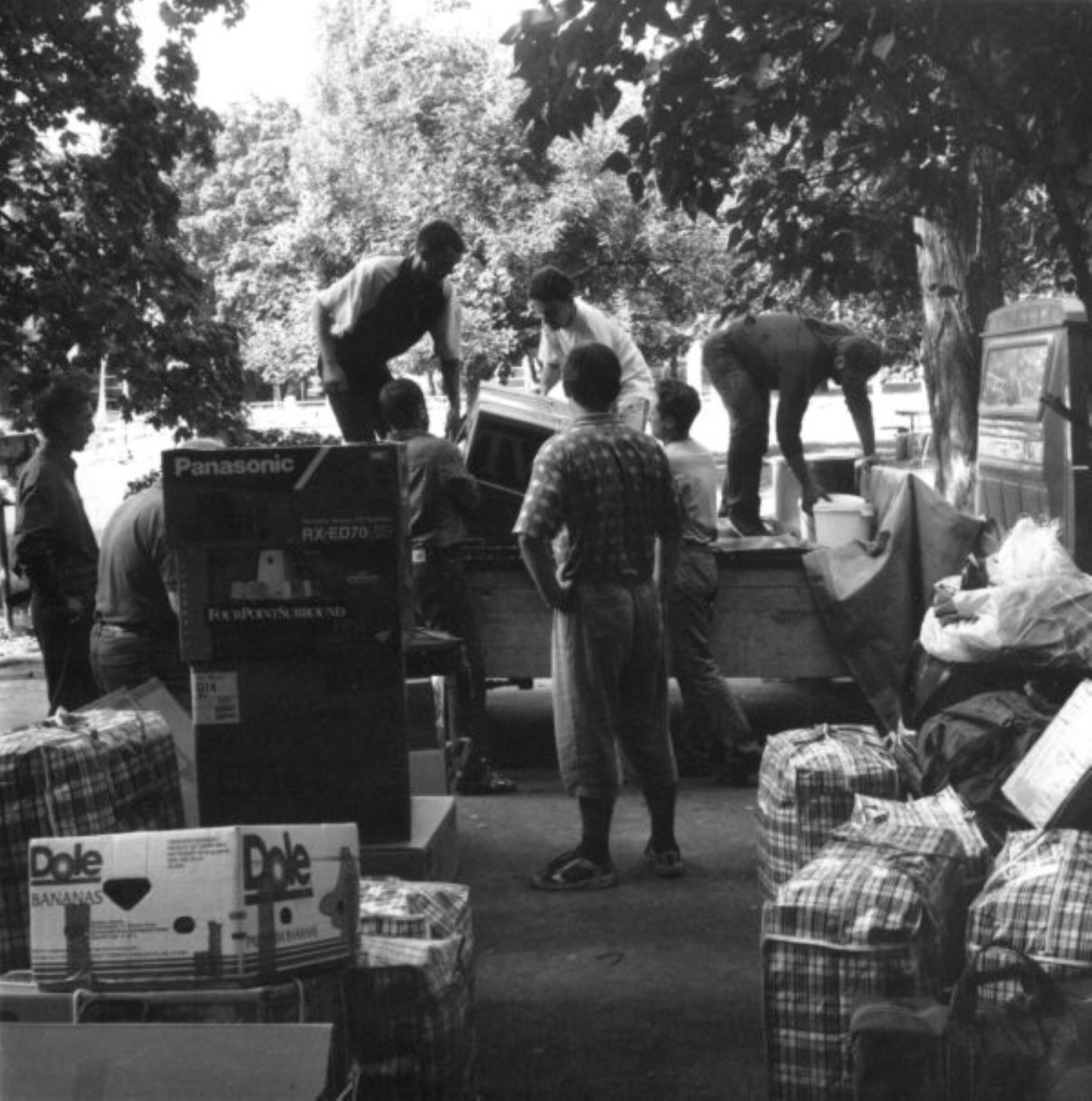
Click here for the German version. “Basically, our journey to Germany began as early as December 1997. In the bitter cold, I stood in long lines outside the German Embassy in Kyiv to get an appointment and the necessary forms for a visa application,” Rita Ostrovska recalls more than two decades later. Born in Kyiv […]
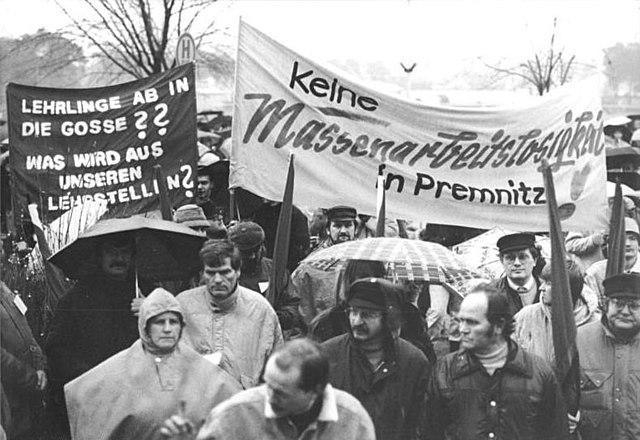
In the engine room of East Germany’s transformation
The Treuhandanstalt was an agency under the Federal Ministry of Finance responsible for the privatization of the East German economy, and its activities in reunified Germany remain highly controversial to this day. In East Germany in particular, the Treuhandanstalt has left a deep imprint on the collective memory. There is no doubt that the agency’s […]