


Post
4 Min.
11. February 2026
Morgenröthe-Rautenkranz: From a Propaganda Site to a Modern Space Museum

Dr. Tilmann Siebeneichner
Koordinator Leibniz-Lab „Umbrüche und Transformationen“
Institut: Leibniz-Zentrum für Zeithistorische Forschung Potsdam (ZZF)
E-Mail: siebeneichner@zzf-potsdam.de
Alle Artikel dieser Autor:inClick here for the German version.
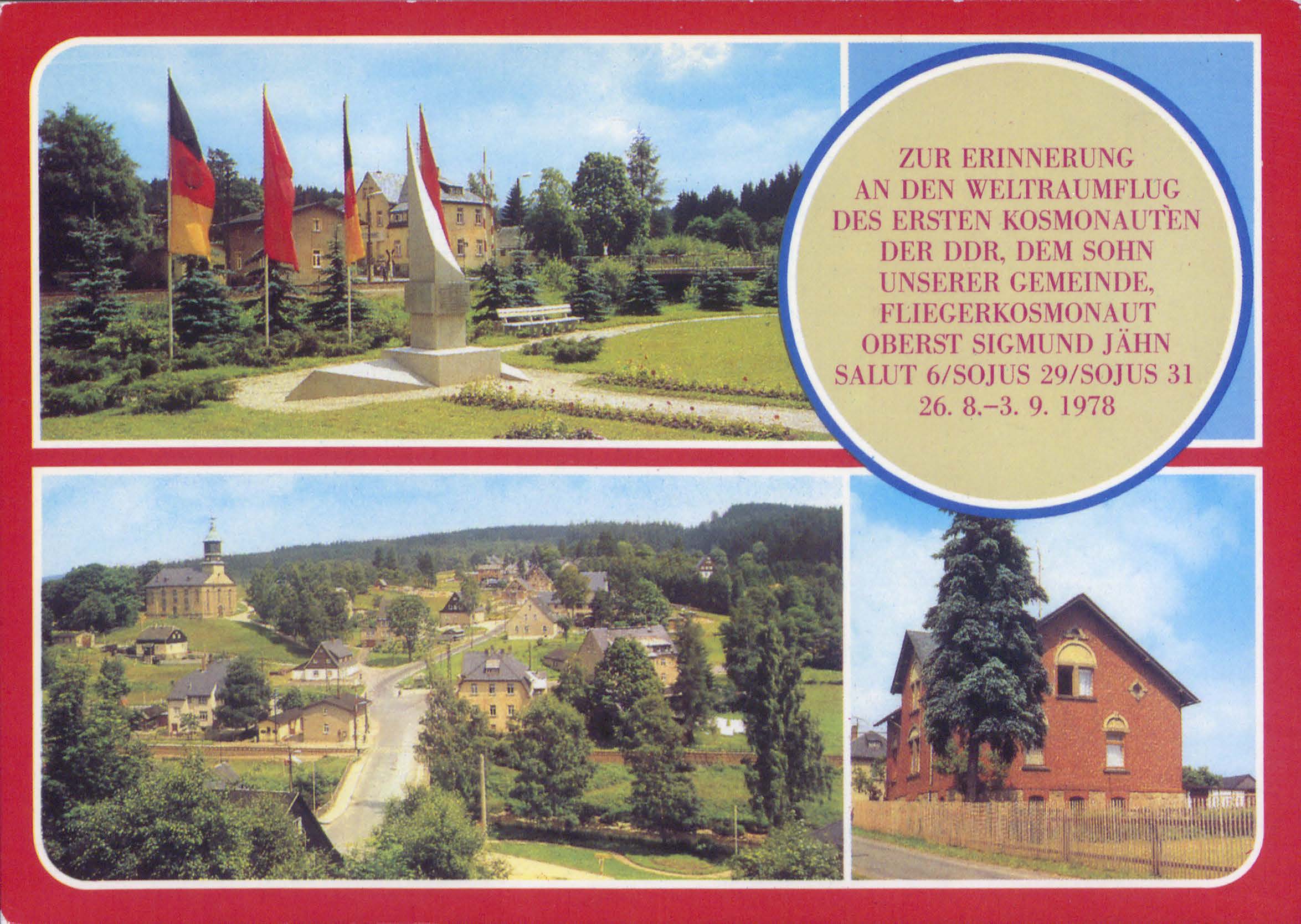
In the late 1970s, the small mountain village of Morgenröthe-Rautenkranz in the Vogtland region suddenly became a state-sponsored pilgrimage site. The reason for this was the so-called “space-first” achievement of the “Workers’ and Peasants’ State”: “The first German in space—a citizen of the GDR,” East German media proudly reported on August 26, 1978, regarding Sigmund Jähn, who was born in Morgenröthe-Rautenkranz on February 13, 1937. With the GDR’s space debut—just in time for the 30th anniversary of the “workers’ and peasants’ state”—the SED regime declared itself the pinnacle of German history and seemed to have a clear lead in the perpetual competition with its national systemic rival. The future belonged to the GDR, not the FRG, Jähn’s spectacular success seemed to signal—and not just to West Germans, but to the entire world.
During the Cold War, space served as a highly symbolic arena for two competing systems: From the first artificial satellite, Sputnik (1957), to the first humans in space, Yuri Gagarin (1961) and Valentina Tereshkova (1963), and the first moon landing by Neil Armstrong (1969), all the way to Sigmund Jähn’s spaceflight in August 1978: “space firsts” fascinated people worldwide and suggested technical, social, and moral superiority that transcended the boundaries of the blocs. The GDR also sought to capitalize on this fascination.
The Museum in Morgenröthe-Rautenkranz as a State Propaganda Tool
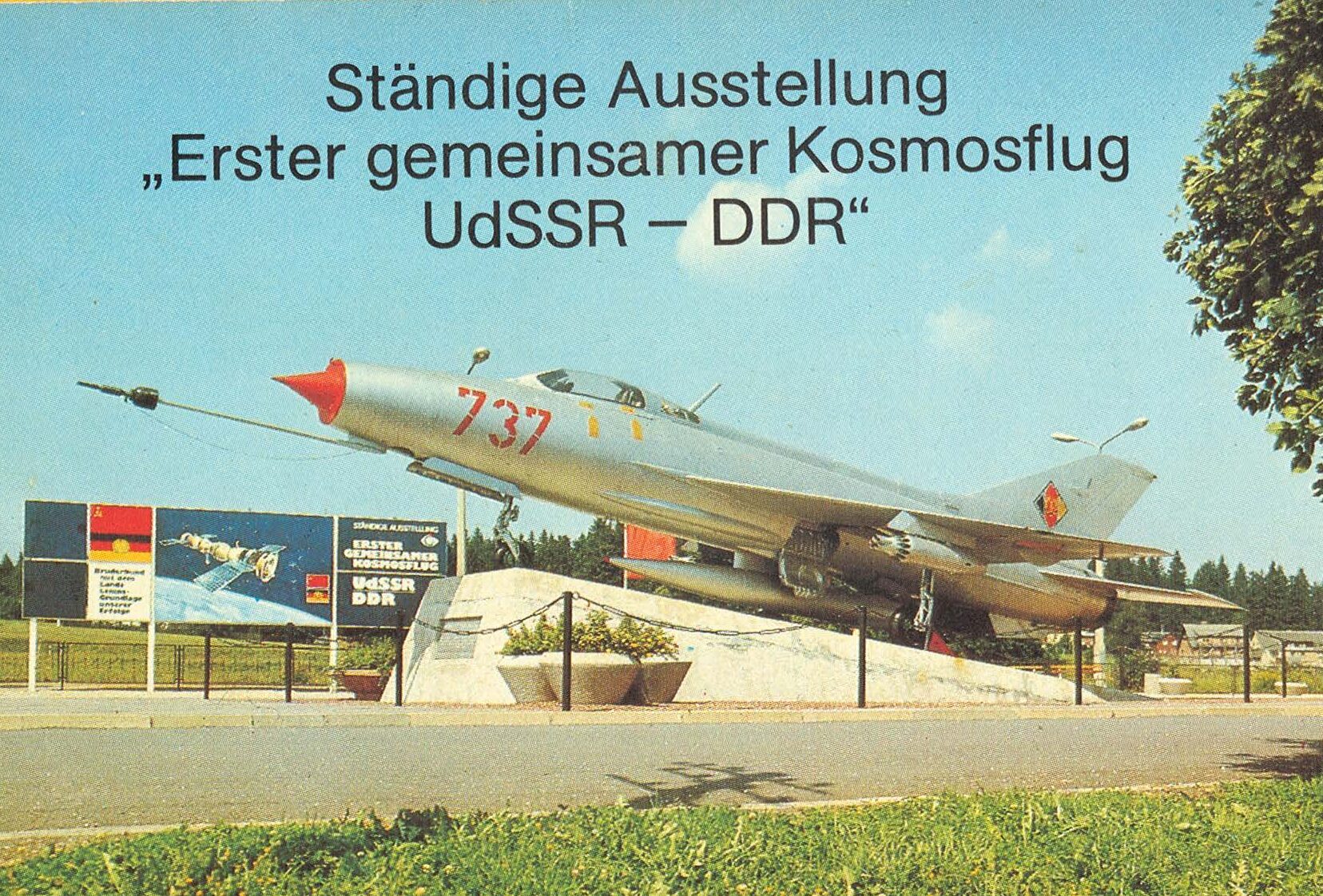
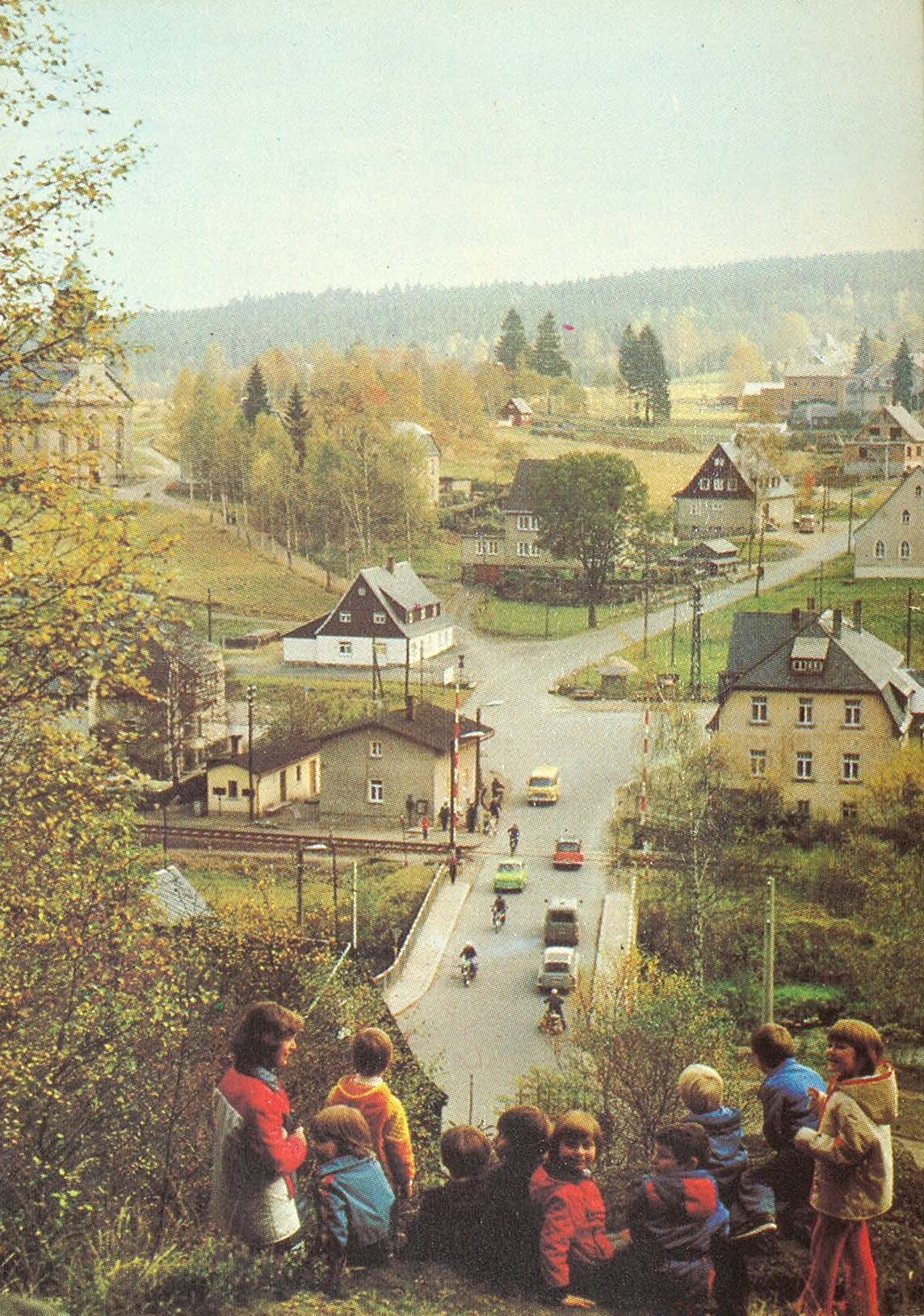
Soon after Jähn’s spaceflight, a “Permanent Exhibition: ‘First Joint Spaceflight USSR–GDR’” was set up in his hometown of Morgenröthe-Rautenkranz—in the local train station building, to be precise—and it quickly became a popular destination, especially for school groups. Space and the socialist achievements in its exploration seemed ideally suited to the ruling elite for dressing up the core values of state ideology—commitment, discipline, and a willingness to make sacrifices—in a contemporary guise. Jähn’s triumph also fit perfectly with the SED’s aspirations at the time: on the 30th anniversary of its state, it sought to establish a specifically socialist sense of homeland that combined pride in local traditions and achievements with unconditional loyalty to the GDR government. In the FRG, a simple worker like him would never have made it as an astronaut, as Jähn would maintain until his death. In fact, however, he was among the first jet pilots in the GDR and enjoyed a meteoric career in the National People’s Army (NVA).
Searching for a new approach following the fall of the Berlin Wall
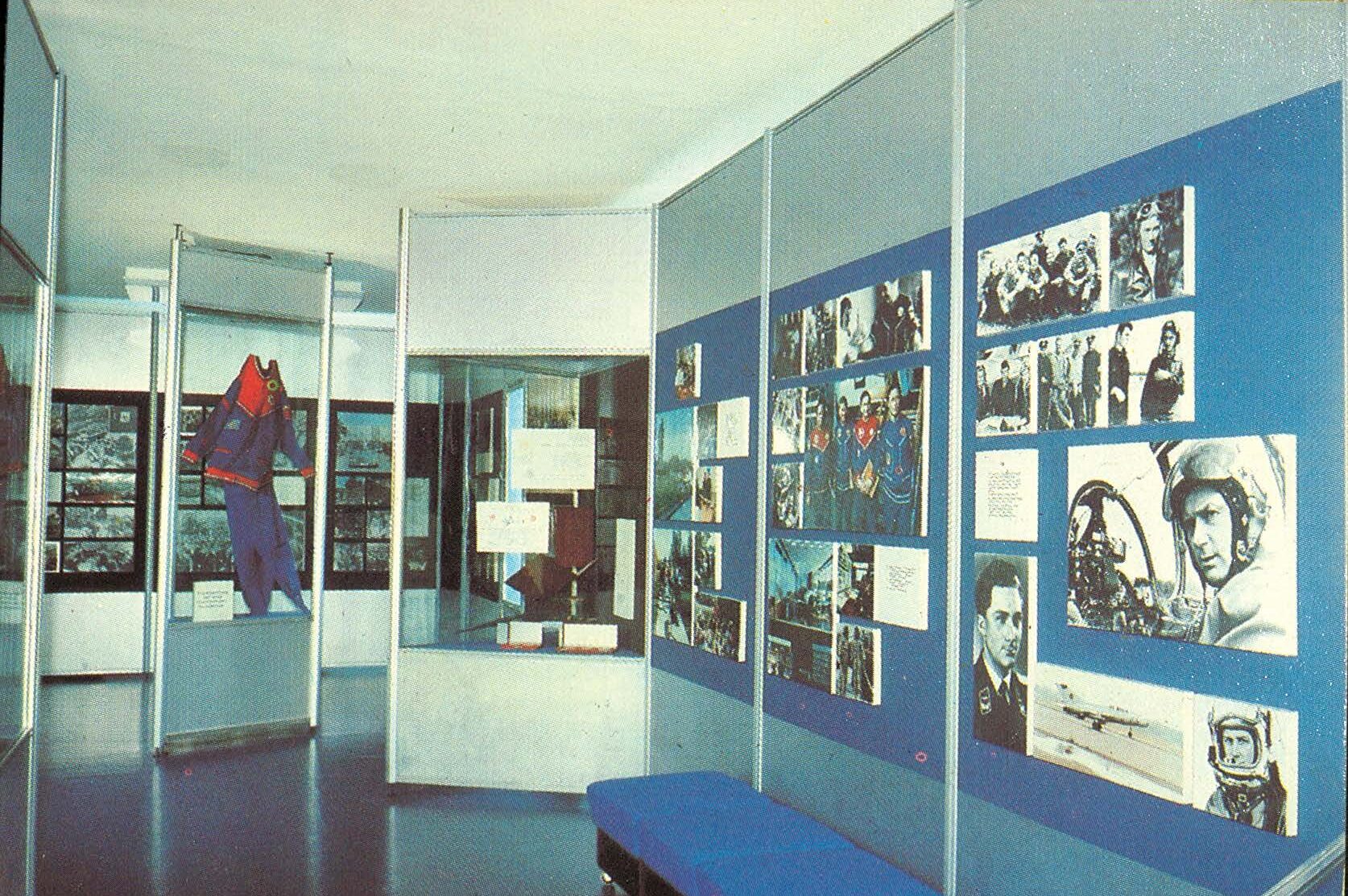
Jähn was—and remains—one of the greatest heroes East Germany has ever produced. Nevertheless, in the wake of the upheaval of 1989–90, the “Permanent Exhibition” in Morgenröthe-Rautenkranz initially faced closure due to a severe lack of visitors. It seemed all too much like a symbol of a state-sanctioned cult of personality and an equally state-sanctioned approach to history. Thanks to the efforts of the local municipal council as well as “various figures from the German and international space industry,” as stated in a museum brochure, the exhibition was able to continue from 1992 onward under a new name—“German Space Exhibition Morgenröthe-Rautenkranz”—and with a revised concept, and it has been a tremendous success. In 2006/2007, the exhibition moved from the former train station to a new building with significantly more exhibition space. Since September 2023, construction has also been underway on a second hall to accommodate the interest of approximately 70,000 visitors annually. The new exhibition offers insights into the history of international space travel and space research and features special exhibits, such as a walk-through module of the Soviet MIR space station.
In this respect, it differs only slightly from other space exhibitions, such as those found in Speyer or Munich. No other German space exhibition, however, is as closely linked to a single person as the one in Morgenröthe-Rautenkranz. Both those involved and observers agree that it owes much of its belated success to Sigmund Jähn himself. Always described as approachable and down-to-earth, Jähn personally guided interested visitors through “his” exhibition time and again until his death in 2019.
However, reading the countless interviews he gave until his death, one gets the impression that the first German in space spoke less and less about space as he grew older. He viewed contemporary space projects, such as an expedition to Mars, with extreme skepticism, because he saw them primarily as the excesses of a predatory and reckless humanity drawn to distant planets only because it had destroyed and exploited its own. In this vein, Jähn preferred to talk about nature and planting trees, which he liked to describe as his favorite hobby. The final exhibit in the exhibition in Morgenröthe-Rautenkranz is a park bench in the forest—Jähn’s favorite spot, as interested visitors learn—and they are invited to pause once more and take a deep breath before leaving the exhibition.
Change of a museum
There is no doubt that the Weltraum exhibition in Morgenröthe-Rautenkranz expresses a strong sense of attachment to the local community and a barely concealed pride in what has been achieved here. To what extent this is also a result of the SED’s regional policy from the 1970s remains an open question. However, the transformation of the exhibition after 1989/90 makes it clear that this connection to the local homeland was not synonymous with the unconditional loyalty to the SED that the party intended. Even though Jähn spent his life defending the GDR as a historically justified experiment, after 1989/90 the former NVA general became a “space ambassador” recognized throughout Germany. The extraordinary intertwining of individual biography and international space history in Morgenröthe-Rautenkranz is certainly also a result of its GDR heritage. This heritage, however, allows the exhibition there—more so than comparable exhibitions elsewhere in Germany—to cater to a widespread contemporary need for “authenticity” or “authentic” presentation. “They breathe life into technology,” praised a member of the Bundestag, highlighting Jähn’s presence in Morgenröthe-Rautenkranz and thus summing up the formula for success of the German Space Exhibition.
It remains to be seen what direction the exhibition will take now that Jähn has passed away. Its eventful history, however, clearly demonstrates how those in charge on the ground managed, after 1989/90, to innovatively transform the legacy of the GDR—marked by a cult of personality and political manipulation of history—and successfully open the “Space Village in the Vogtland” to a pan-German, and by extension global, audience, as evidenced by the various guestbook entries from around the world.
Über diesen Artikel
Lesen Sie auch

Photographs by the artist Rita Ostrovska: A Reflection of (Post-)Soviet Jewish Experience
Click here for the German version. “Basically, our journey to Germany began as early as December 1997. In the bitter cold, I stood in long lines outside the German Embassy in Kyiv to get an appointment and the necessary forms for a visa application,” Rita Ostrovska recalls more than two decades later. Born in Kyiv […]
In the engine room of East Germany’s transformation
The Treuhandanstalt was an agency under the Federal Ministry of Finance responsible for the privatization of the East German economy, and its activities in reunified Germany remain highly controversial to this day. In East Germany in particular, the Treuhandanstalt has left a deep imprint on the collective memory. There is no doubt that the agency’s […]
40 years Schengen agreement
With an area of over four million square kilometers, a population of nearly 420 million, and 3.5 million border crossings each day, the Schengen Area is the world’s largest area of free movement across borders (European Council 2025). The Schengen Agreement is considered a milestone in European integration. It realizes one of the four fundamental […]