

Post
4 Min.

17. November 2026
Lucia Mrázová
Wissenschaftlerin
Institut: Leibniz-Institut für Länderkunde (IfL)
E-Mail: l_mrazova@leibniz-ifl.de
Alle Artikel dieser Autor:in“Many of them don’t like refugees..They don’t want to employ you. They don’t give you a chance to prove yourself or find work. They just tell you to go away without any explanation.”
The German labour market is in desperate need of skilled workers – nurses, physicians, engineers, IT specialists, craftspeople and truck drivers. Projects run by private companies, public agencies, regional and national bodies bringing skilled workers from abroad are booming. ‘Make it in Germany’ or the WE-Fair Alliance are government-backed initiatives that aim to strengthen the recruitment of international skilled labour. At the same time, service providers as well as public administrations are put under pressure to bring as many people as possible into employment. Nevertheless, what happens to those whose language skills are insufficient, don’t own a driver’s license or their residency status is unclear?
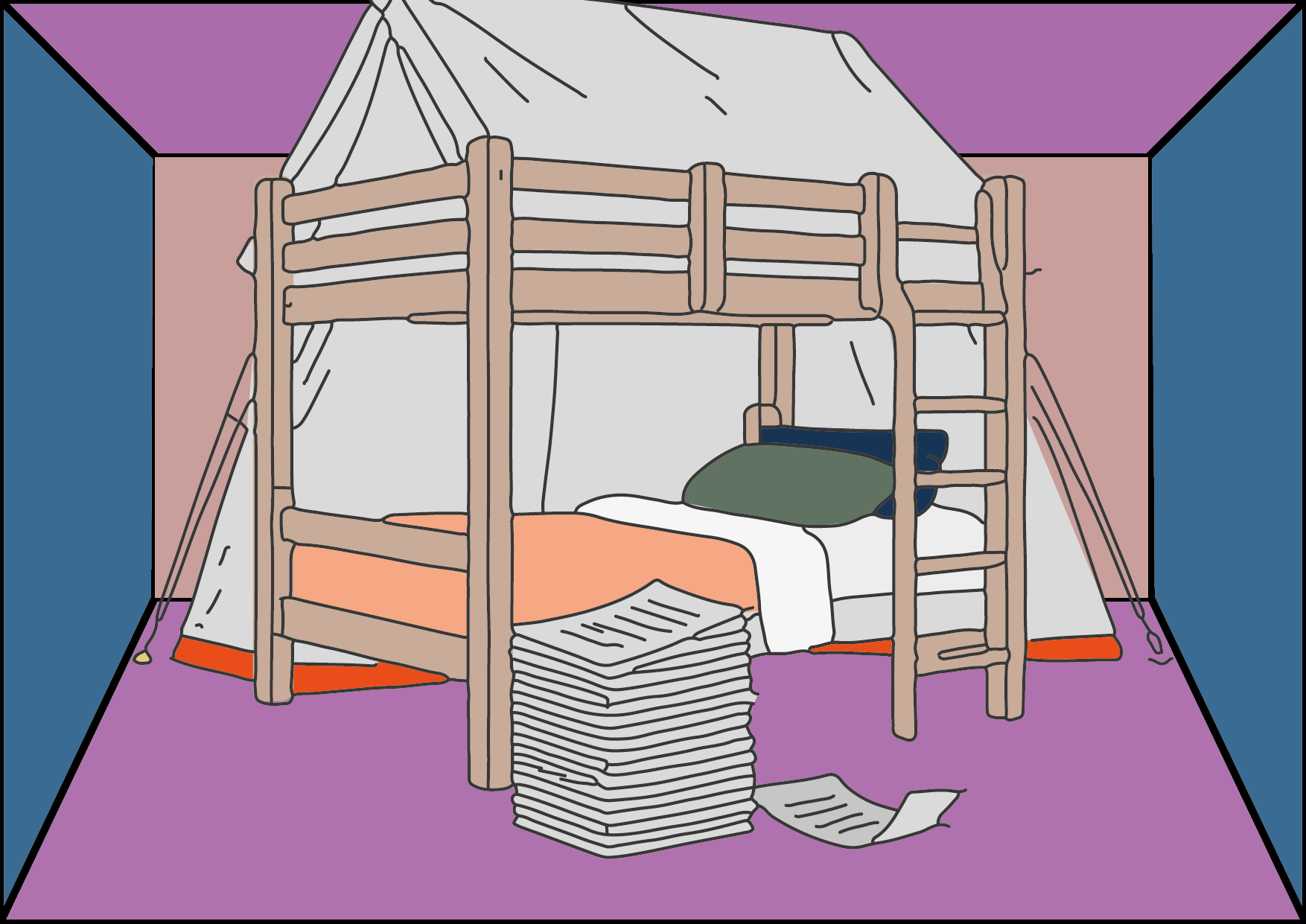
The pressure to integrate as many individuals into the labour market as possible, has its pitfalls that are felt by migrants from all walks of life. The visualisation below portrays these barriers. It is based on a project called MILEstone which tries to improve local administrative structures in order to enable the integration of migrants into the labour market. This article is based on focus group interviews as well as testimonials carried out throughout the project.
We have discovered through the project that barriers do not end with finding a job. Yet the process of searching for one reveals the hidden secrets of a broken and under-funded integration system that places a heavy burden on migrants, street-level bureaucrats, practitioners, associations and companies alike.
The increase in the number of projects on ‘labour market integration’, happens along with the under- and de-funding of projects that focus on social integration and asylum services. Cuts of 45% in integration courses were followed by the priorisation of migrants expected to enter the labour market, whilst courses for asylum-seekers have been drastically reduced from 700 to 25-hour modules. Asylum counselling which helps newcomers navigate legal and administrative systems independently of government authorities has faced a 80% funding reduction, leaving them with no guidance.
Such measures are part of an anti-migrant campaign of the current federal government of the conservative CDU and social-democratic SPD which has pledged to speed up asylum procedures and deportations, curb irregular border crossings and cut asylum benefits. This is not only bolstering support for the far right – visible through the current election results in eastern Germany, but it is also making the livelihoods of thousands of people into forced precarity.
Such measures are a lose-lose situation for everyone. They not only leave thousands of people in limbo, but also stop them from being able to enter the labour market, build their livelihoods and become independent. Not being able to participate in language courses prevents people from social contact, leading them to isolation which has a substantial effect on their mental health. It equally stops them from being able to understand administrative procedures which can have substantial consequences.
“Many Syrians who came here … are unable to learn it. Learning the language is difficult, especially for the older generation, unlike the younger generation who are able to learn it in a year or two. And German is really difficult.
Language barriers were said to be one of the greatest obstacles for employers in hiring migrants. They are then left to their own devices and have the option to either set up their own language courses – which some companies do, if they have the resources; or not employ new workers and possibly close. This is particularly felt across rural eastern Germany that has mainly small and medium-sized companies. At the same time, not creating opportunities for learning languages feeds the shadow economy of irregular employment where migrants are at a greater risk of exploitation.
Such measures create a hierarchy between those who have arrived through skilled-worker contracts and those who came through the asylum process or irregularly. One group is seen as more desirable in the eyes of employers, whilst the other is made disposable. This can be seen in the fact that only those expected to enter the labour market can now join integration courses. However, who holds the authority to determine this? When carrying out interviews, mainly with migrants of third-country origin, many stated that the only thing they want to do is to work. Nevertheless, they are either not allowed due to residency issues, insufficient language proficiency or those who have higher education are offered positions that have nothing to do with their previous experience.
“We want to work and are willing to work. The difficulty is that they ask you for things that are beyond your capabilities, such as language skills or a driver’s license.”
Public administrations support individuals and manage essential daily services that communities rely on, such as education, employment, welfare benefits and residency status. They are also there to uphold the rule of law, protect public interests, and ensure government operations remain transparent, ethical, and fair to its citizens. Nevertheless, due to current public spending cuts, frequent legislation changes and an increased complexity of cases, many people have been experiencing bureaucratic hurdles, paternalistic counselling, misunderstandings due to a lack of interpretation and translation and discriminatory treatment when in contact with authorities. We see this as one of the greatest obstacles for people to access employment because street-level-bureaucrats have the power to decide: if the person gets access to a language course, gets their certificates validated, or is informed of a certain job opening.
Testimonies of migrants from the project show that such anti-migrant sentiments are widespread across the whole of society – care homes where the elderly refuse to be taken care of by a foreigner; plumbers who are regularly harassed because of having the wrong skin colour; or verbal abuse by public administrators.
“We hope that they will stop this discrimination, that refugees cannot find work.”
The current situation requires all actors to take serious measures in order to address discriminatory treatment in all areas of life. Similarly to the recommendations of the InRa-Study, we argued that sensitisation, mandatory education against discrimination and racism, diversity concepts as well as independent complaint measures should become an internal feature of all public as well as private institutions.
Inclusion and access to services, participation and representation in decision-making strengthen communities, and are essential elements of fair and inclusive societies. Measures that strengthen them should be not only maintained but also supported and reinforced. In practice this also means that people’s rights and dignity should never depend solely on their economic contribution. Each individual should be able to access protection and support when needed. This is the only way we can cultivate and sustain solidarities in conditions that try to dissolve them.
Über diesen Artikel
Lesen Sie auch

On the Run – The Story of Mouhamed
The German version is here. On a typical weekday, life in the city is bustling. Many different people are busy going about their daily routines. Some would like to find work, but they can’t—they are forced to wait. Mouhamed is one of them. He was born in Cameroon in 1994 and studied political science. After […]

Saudi Arabia in Transition: Between Reform and Control
Comedy and film festivals, rock concerts, and resorts on the Red Sea—these are not the kinds of things one would have associated with Saudi Arabia until recently. For eleven years now, a dramatic social transformation has been taking place in the vast Gulf state: Until then, the feared religious police enforced strict gender segregation in […]
Greek strawberries “made in Bangladesh”
Strawberries are now also available to buy in winter. They thrive in Nea Manolada, Greece, but there are downsides to growing them. Scientist Johannes Jungfleisch has investigated the conditions of South Asian workers.