

Post
4 Min.

9. November 2025
Turning Points – November 9th in German History

Dr. Hanno Hochmuth
Projektleiter Leibniz-Lab
Institut: Leibniz-Zentrum für Zeithistorische Forschung Potsdam (ZZF)
E-Mail: hochmuth@zzf-potsdam.de
Alle Artikel dieser Autor:inNovember 9th is considered a day of upheaval in Germany. Four significant turning points of the 20th century fell on this day. On November 9, 1918, the German Empire ended with the proclamation of the Republic. Exactly five years later, on November 9, 1923, Adolf Hitler and Erich Ludendorff attempted a coup in Munich to seize power and overthrow the Weimar Republic, which he actually succeeded in doing almost ten years later. On November 9, 1938, synagogues burned throughout Germany, countless Jewish businesses were destroyed, and many Jewish people were murdered. The November Pogrom is therefore considered a crucial step towards the Holocaust. November 9, 1989, the day the Berlin Wall fell, finally ended the division of Germany, which was a result of the German war of annihilation. Thus, all four November events are historically interconnected.
The events of November 9th were important turning points in contemporary history. The events of 1918 and 1989, in particular, were turning points in history, fundamental upheavals that turned social orders upside down. The November events changed perspectives by shifting the point of view: what had just been the present suddenly became history.
We tend to view these upheavals as absolute. All the November events had their pre- and post-events, obscuring the longer-term developments in which they were embedded. Despite the November Revolution of 1918, many of the old elites of the German Empire retained considerable political influence, which they used to oppose the Weimar Republic. The November Pogrom of 1938 was part of a long series of state measures aimed at disenfranchising and persecuting Jewish people, a process that began as early as 1933 and only ended in 1945. Even the fall of the Berlin Wall in 1989 didn’t simply happen out of the blue, but was part of a longer period of upheaval, which researchers at the Leibniz Lab refer to as the “Long History of the ‘Wende'” (the fall of the Berlin Wall). Therefore, structures that change over long-term transformation processes are often far more important than individual events.
How we commemorate November 9th today
Events are of crucial importance to the culture of remembrance. This also applies to the November events, which continue to significantly shape German memory culture to this day. However, memory itself is constantly evolving and subject to change as society transforms. The November Revolution of 1918 received renewed attention on its 100th anniversary because significant anniversaries structure our culture of remembrance. It also gained relevance because many people today draw parallels to the crises of the Weimar Republic that followed the unfinished revolution. In contrast, the Hitler-Ludendorff Putsch of 1923 receives far less attention, even though the event particularly illustrates the threat to democracy posed by the radical right.
The November Pogrom of 1938 holds a central place in German memory culture. However, the cautionary significance of this date is diminishing in the face of resurgent antisemitism. Yet, the pogrom is more relevant than ever. Moreover, the horrific events of 1938 stand in stark contrast to the fall of the Berlin Wall in 1989. It is therefore one of the great challenges of historical policy to commemorate both the darkest and the brightest hours of German history on November 9th.
An ambivalent date
November 9th is an awkward date. Because it doesn’t lend itself to celebration on its own, the more secular October 3rd was chosen as Germany’s national holiday. Yet November 9th would actually be a sensible alternative to German Unity Day, as it encapsulates the full ambivalence of German history and offers cause for critical reflection. In this respect, November 9th is much more fitting for our post-heroic culture of remembrance, which has moved away from traditional hero worship and instead focuses on the commemoration of victims.
The memory of the victims of National Socialism becomes very clear when, on November 9th, the Stolpersteine (stumbling stones) in front of houses are cleaned in many places across Germany. This happens spontaneously, emerging from civil society. Our culture of remembrance is therefore not imposed by the state, but rather a vibrant struggle among diverse actors. In a pluralistic society, there are very different positions and interests regarding historical policy. In recent times, German memory culture has been expanded and challenged by postcolonial perspectives that focus on German acts of violence in the colonies and thus assign a different significance to the German November events.
November 9th holds many names
The struggle over memory is evident, not least, in the competing terms used to describe the November events. The enemies of the November Revolution of 1918 conspiratorially referred to it as the “stab in the back.” The murderous November pogrom of 1938 was long euphemistically called “Kristallnacht” (Night of Broken Glass). And even today, there is disagreement about how to appropriately describe the events of 1989. Many former civil rights activists prefer the term “Peaceful Revolution”—note the capital “F”—to place the 1989 upheaval in the tradition of the French Revolution of 1789.
They vehemently reject the term “Wende” (turning point), because it was initially coined by the SED (Socialist Unity Party of Germany) to give the weakened ruling party a reformist image and thus maintain its own power. The East German population, however, “stole” the term “Wende” (turning point) from the SED (Socialist Unity Party of Germany) and largely still uses it today to describe the fundamental transformation of their own lives, which at that time affected absolutely everyone in East Germany. Thus, for many East Germans, the turning point of November 9, 1989, remains the decisive turning point in history.
Über diesen Artikel
Lesen Sie auch
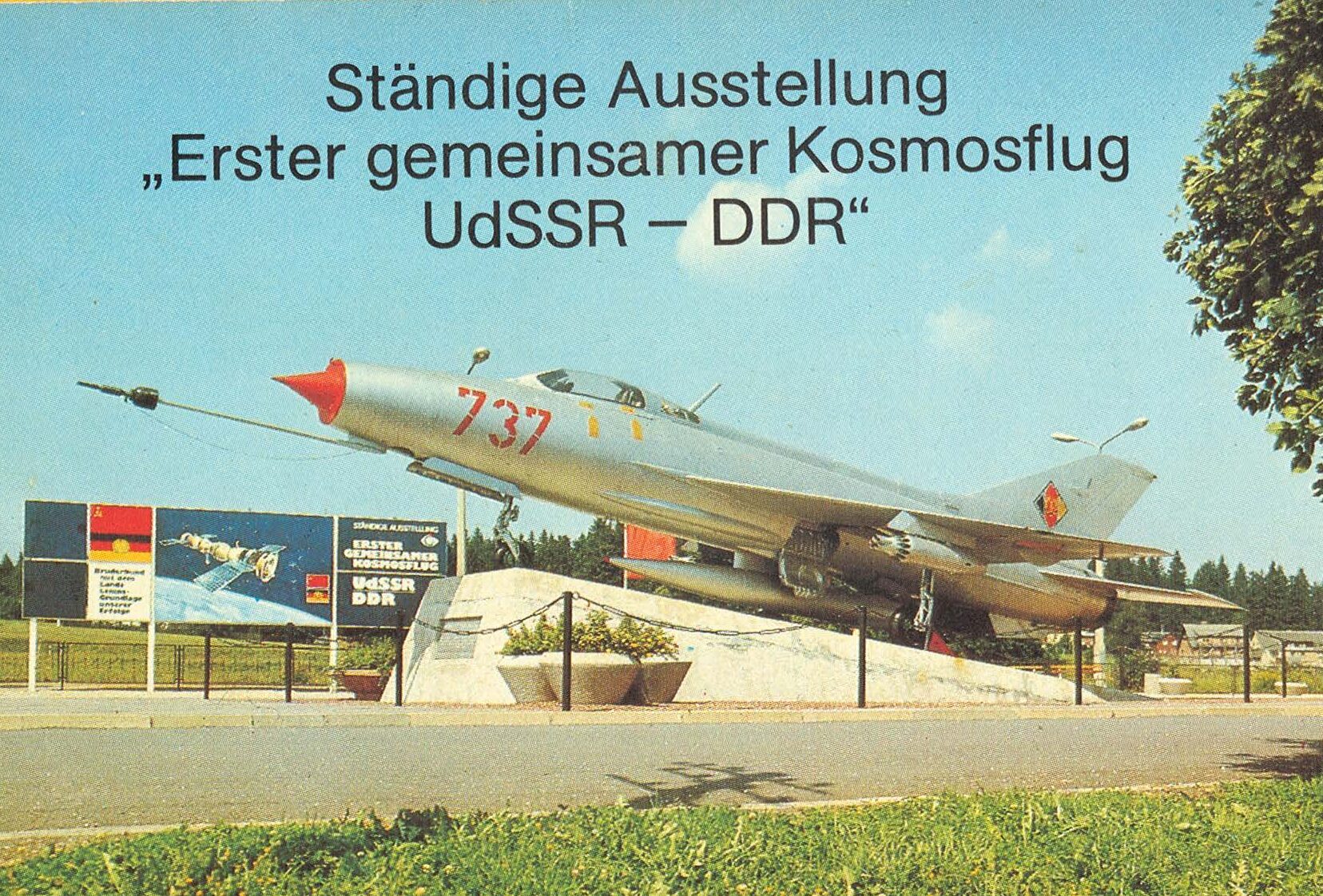

Morgenröthe-Rautenkranz: From a Propaganda Site to a Modern Space Museum
Click here for the German version. In the late 1970s, the small mountain village of Morgenröthe-Rautenkranz in the Vogtland region suddenly became a state-sponsored pilgrimage site. The reason for this was the so-called “space-first” achievement of the “Workers’ and Peasants’ State”: “The first German in space—a citizen of the GDR,” East German media proudly reported […]
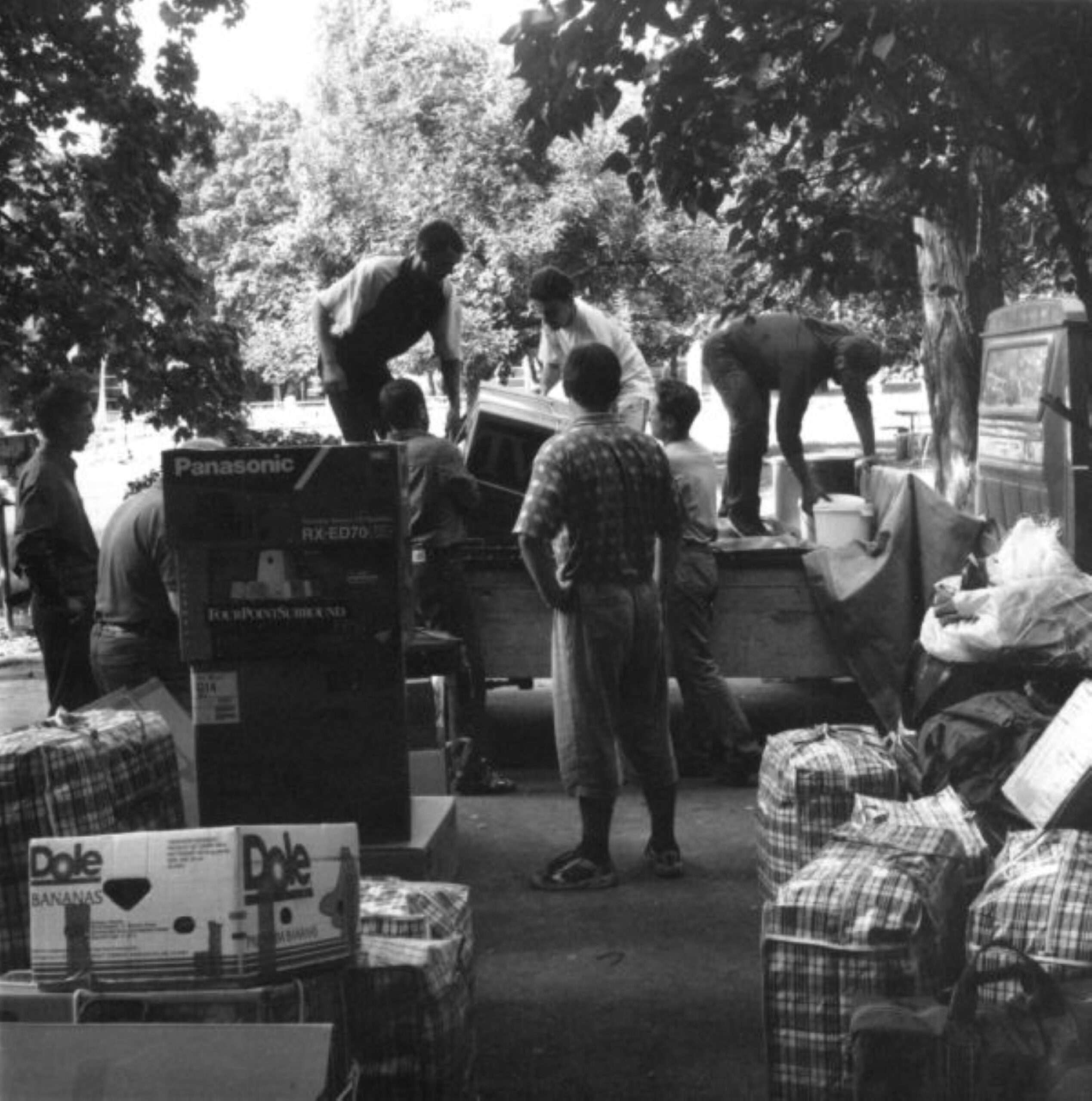
Photographs by the artist Rita Ostrovska: A Reflection of (Post-)Soviet Jewish Experience
Click here for the German version. “Basically, our journey to Germany began as early as December 1997. In the bitter cold, I stood in long lines outside the German Embassy in Kyiv to get an appointment and the necessary forms for a visa application,” Rita Ostrovska recalls more than two decades later. Born in Kyiv […]
40 years Schengen agreement
With an area of over four million square kilometers, a population of nearly 420 million, and 3.5 million border crossings each day, the Schengen Area is the world’s largest area of free movement across borders (European Council 2025). The Schengen Agreement is considered a milestone in European integration. It realizes one of the four fundamental […]