


Post
5 Min.
2. January 2026
Photographs by the artist Rita Ostrovska: A Reflection of (Post-)Soviet Jewish Experience
Dr. Julia Roos
Wissenschaftskommunikation
Institut: Leibniz-Institut für jüdische Geschichte und Kultur – Simon Dubnow
E-Mail: roos@dubnow.de
Alle Artikel dieser Autor:inClick here for the German version.
“Basically, our journey to Germany began as early as December 1997. In the bitter cold, I stood in long lines outside the German Embassy in Kyiv to get an appointment and the necessary forms for a visa application,” Rita Ostrovska recalls more than two decades later. Born in Kyiv in 1953, the artist moved from the Ukrainian capital to Kassel in September 2001, together with her husband, her son, and her parents.
By leaving Ukraine after the collapse of the Eastern Bloc, Rita Ostrovska was part of a mass exodus: Since 1989, 1.5 million Jews have left the (former) Soviet Union and emigrated primarily to Israel and the United States. In reunified Germany, around 220,000 “Jewish quota refugees,” predominantly from Ukraine, were admitted.
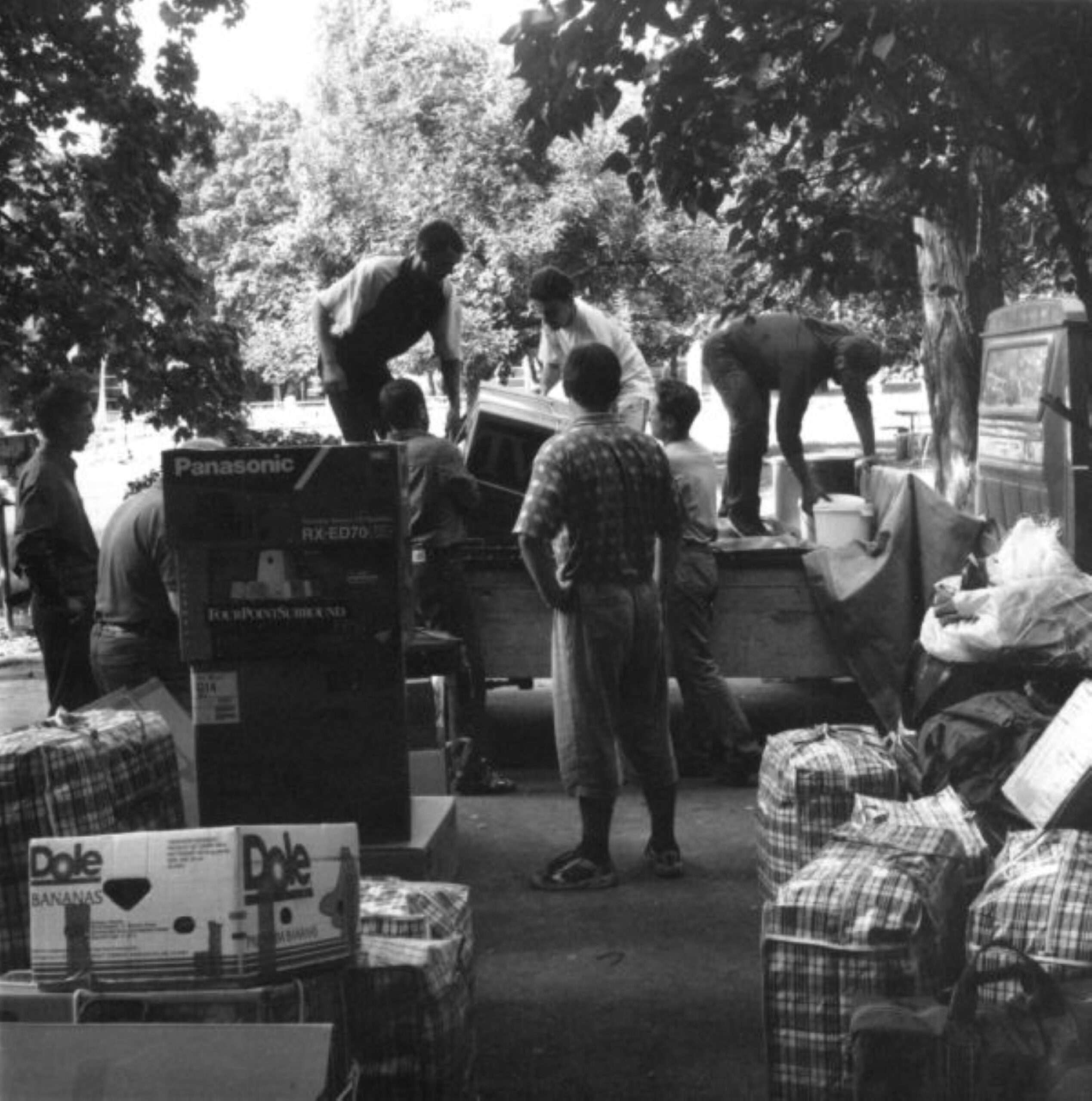
Rita Ostrovska and her family drove for 30 hours in a van packed with bags, suitcases, and personal belongings until they arrived at the initial reception center in Kassel on September 11, 2001. As an artist, Rita Ostrovska had previously visited Germany several times to exhibit her photographs. But, as she emphasizes in retrospect, “It’s one thing to travel to Germany briefly for a photo exhibition, and quite another to move here permanently.” In Kassel, the artist was reunited with her parents, who had left the country in the spring of 2001. Friends of the family were also already living there. At the Kassel Art Academy, Rita Ostrovska eventually completed her studies in visual communication. In 2010, she opened her studio for photography, ceramics, and graphic design, “KunstVision,” there.
The artist thus brought with her her body of work to date—an archive reflecting the upheavals and turning points of the 20th century: the collapse of the Eastern Bloc, refugee and migration movements and the associated shifts in language and multiple identities, integration and exclusion, as well as the omnipresence of antisemitism.
Jewish Life in the Heart of the “Century of Extremes”
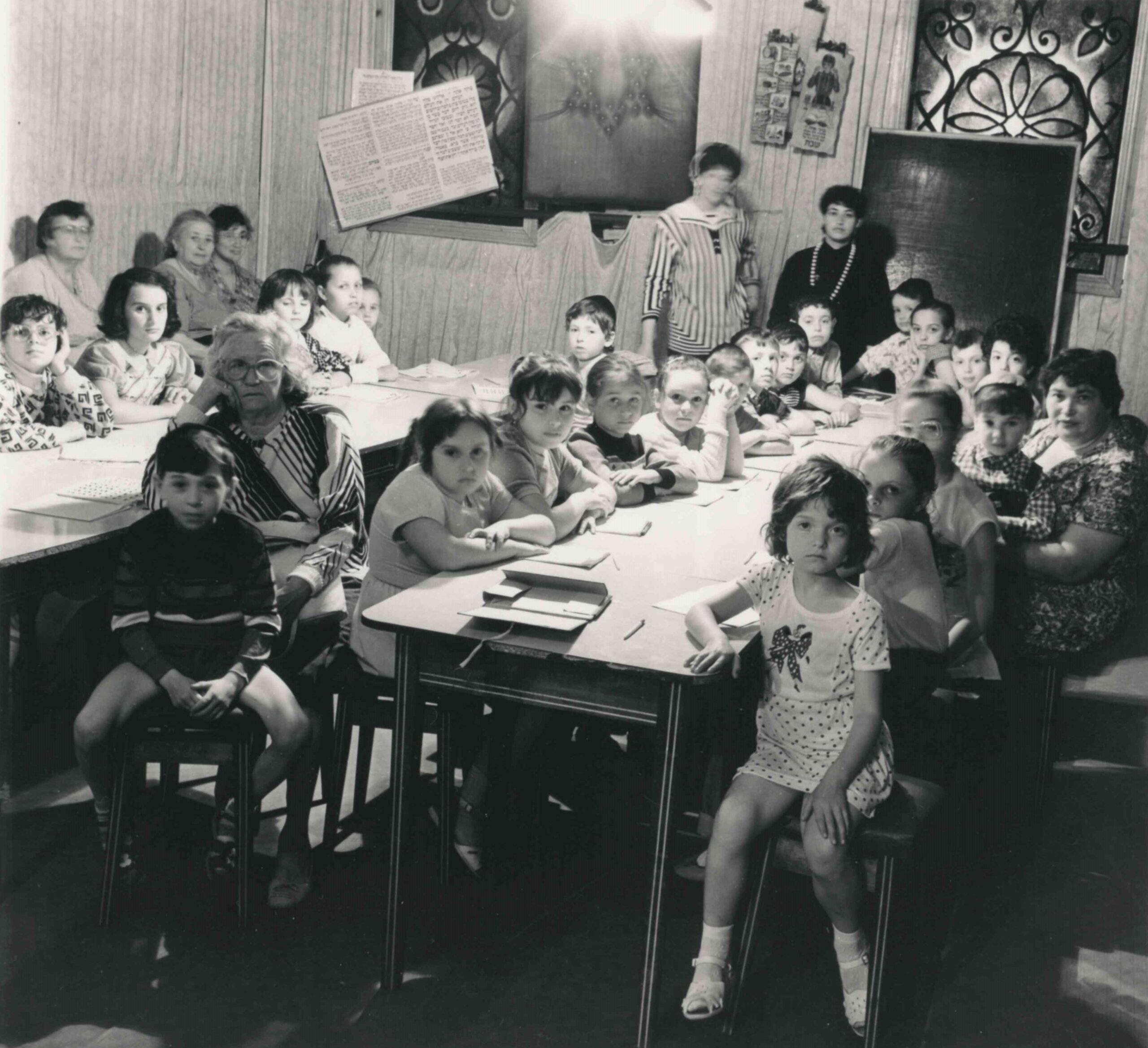
The suitcases also contained a large number of unique photographs: For her series “Jewish Album,” Rita Ostrovska had photographed places of traditional Jewish life in Ukraine—the shtetls. As a result of pogroms and expulsions, including those during the plague epidemic of 1348–49, Jews migrated to Central and Eastern Europe. As a classic form of Jewish settlement, the shtetls emerged there as a distinct Jewish cultural space with its own language: Yiddish. Despite violence, war, and pogroms, Central and Eastern Europe remained the center of Jewish life until World War II.
After World War II, some of these shtetls revived under completely changed conditions. Religion was officially banned under the Soviet regime. Rita Ostrovska knew from the entry in her Soviet passport that she was Jewish, though she did not practice the religion herself. Yet in the shtetls, traditions were preserved in secret. Jews celebrated the holidays in secret and baked matzah for Passover. They spoke Yiddish mixed with Russian and Ukrainian. “When I first came to Shargorod in 1989, I was fascinated by the fact that there were still ‘real Jews’ there who were neither ashamed of nor hid their Jewishness, unlike us in Kyiv,” Rita Ostrovska recalls.
Between 1989 and 2001, Rita Ostrovska visited a total of 43 of these shtetls and towns in the southwestern part of the country, including Schargorod, Chernivtsi, Berdychiv, Mohyliv-Podilskyi, and Bereshad. All these places are located in the region that Eastern European historian Karl Schlögel describes as the “core zone of the ‘century of extremes,’” situated on the main front of the war between National Socialism and Soviet communism.
During World War II, the Germans and their collaborators murdered nearly all those Jews who were unable to flee in time. Yet even during the Holocaust, Jewish life in the region was not completely destroyed: particularly in those Ukrainian cities that lay within the Romanian-occupied “Transnistria Governorate” from 1941 to 1944, a somewhat larger portion of the Jewish population survived the Holocaust. In this small area, traditional Jewish life persisted even after World War II—the very life that Rita Ostrovska would capture on camera in the late 1980s and early 1990s—despite the anti-Semitism that took various forms at different times in the Soviet Union.
Explorations of a vanishing world
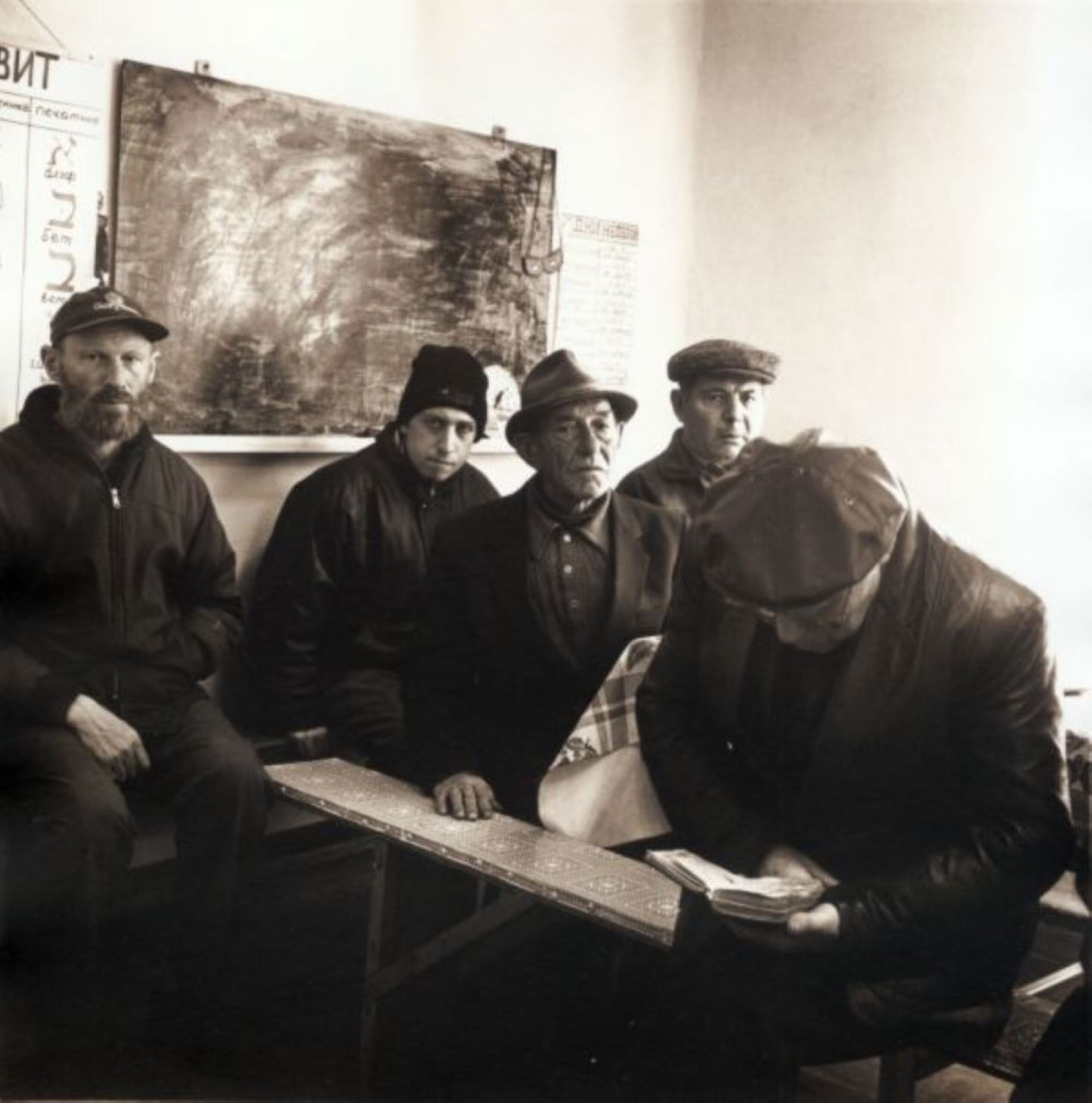
While there, Rita Ostrovska also researched the history of Jewish communities and their annihilation during the Holocaust. This is because, until perestroika, the universalism of communism in many places stood in the way of acknowledging the specific nature of the Jewish experience. Commemorating Jewish suffering was impossible due to official Soviet policies on history and memory, which focused on victory in the Great Patriotic War. In Berdychiv, for example, a memorial stone disappeared in 1953 shortly after its erection: it was intended to commemorate the murdered Jews on the grounds of an airfield where the largest of the mass shootings took place.
Rita Ostrovska spoke with people whose biographies and family histories were shaped by precisely this dual experience: the German extermination and the suppressed memory in the Soviet Union. She had them sing traditional songs and recorded it all on cassettes, which she still keeps in her archive today. Many spoke of their plans to emigrate. While Rita Ostrovska was exploring the world of the shtetls, it was already in the process of disappearing: People were literally sitting on packed suitcases; the upheavals of 1989–1990 made emigration possible for the first time.
Rita Ostrovska followed in the footsteps of those “emigrants,” taking photographs in the United States in 1993—primarily in Brooklyn, New York—in Germany from 1994 to 1996, focusing particularly on her relatives and friends who had already emigrated, and in Israel in 1997. This resulted in a global series documenting the Jewish migration movement of the 1990s, originating from the Ukrainian shtetls.
Rita Ostrovska visited these places one last time in 2000 and 2001 before her own departure. Her photographs illustrate how drastically the towns had changed due to the emigration of Jews: the houses were abandoned, the streets deserted; where children had once made a racket in Sunday school just ten years earlier, only a few people—mostly elderly—remained.
Jewish present in Germany
Rita Ostrovska took the final photographs for the “Jewish Album” during her own emigration: the images of her family’s departure, their journey, and their arrival in Kassel bring the series to a close. Immigration from the former Soviet Union gave Jewish life in Germany a new visibility; the Jewish community’s self-image also underwent a transformation. The Jewish presence in Germany is strongly shaped by the Eastern European family origins of community members, their migration experiences, and their native language, Russian.
The immigration of Jews from Eastern Europe is scarcely present in the minds of the German majority society, even though, as a rule, well over 90 percent of members of Jewish communities share this experience. Recently, however, the post-Soviet Jewish perspective has found expression in contemporary German-language literature, for example in books by Lena Gorelik, Sasha Marianna Salzmann, Dmitrij Kapitelman, and Olga Grjasnowa. Jewish museums are seeking new ways to integrate this new Jewish presence into their exhibitions through projects such as the “Object Days” at the Jewish Museum Berlin.
Rita Ostrovska’s analog archival materials are currently being incorporated into the collection of the German Art Archive at the Germanisches Nationalmuseum in a hybrid format, marking a pioneering effort. Rethinking the collection strategies and exhibition practices of general cultural-historical museums so that the post-Soviet Jewish experience is also narrated and perceived as an integral part of the city’s history is a process that is still in its very early stages. Yet a productive restlessness is already evident, one that is finding its way into the archive and museum and will bring with it numerous exciting discoveries and insights. The project is funded by the Leibniz Lab “Upheavals and Transformations.”
Note: The original version of this text, published on 2 January 2026, states a false number of three millions jews having fled the Soviet Union since 1989. This number has been corrected to 1.5 million jews.
Über diesen Artikel
Lesen Sie auch

Morgenröthe-Rautenkranz: From a Propaganda Site to a Modern Space Museum
Click here for the German version. In the late 1970s, the small mountain village of Morgenröthe-Rautenkranz in the Vogtland region suddenly became a state-sponsored pilgrimage site. The reason for this was the so-called “space-first” achievement of the “Workers’ and Peasants’ State”: “The first German in space—a citizen of the GDR,” East German media proudly reported […]
Greek strawberries “made in Bangladesh”
Strawberries are now also available to buy in winter. They thrive in Nea Manolada, Greece, but there are downsides to growing them. Scientist Johannes Jungfleisch has investigated the conditions of South Asian workers.
On the Run – The Story of Mouhamed
The German version is here. On a typical weekday, life in the city is bustling. Many different people are busy going about their daily routines. Some would like to find work, but they can’t—they are forced to wait. Mouhamed is one of them. He was born in Cameroon in 1994 and studied political science. After […]